

Crewe North Historic and Now


LNWR Book


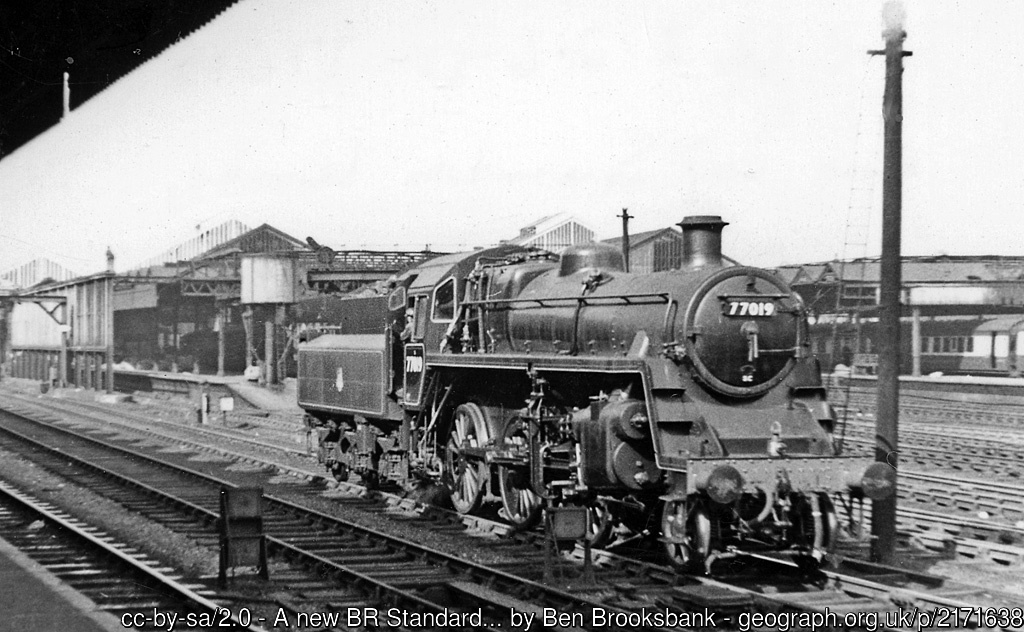
View northward, from the south end of Platform 3. BR Standard 3MT No. 77019, brand-new – but from Swindon Works, is working as a South End Pilot.
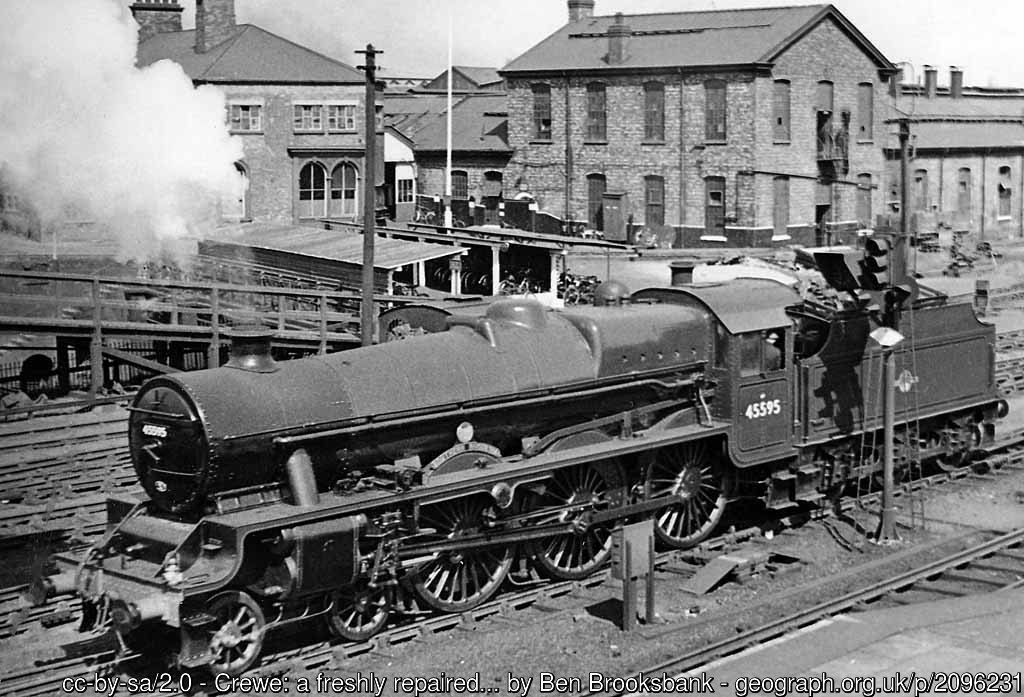
View NW from the footbridge at the north end of Crewe Station that used to lead into the North Locomotive Depot – and used to be thronged by young train-spotters. The Depot is seen behind as this resplendent LMS ‘Jubilee’ 6P 4-6-0 (No. 45595 ‘Southern Rhodesia’) is probably being tested on its first day back in steam after repair at Crewe Works.
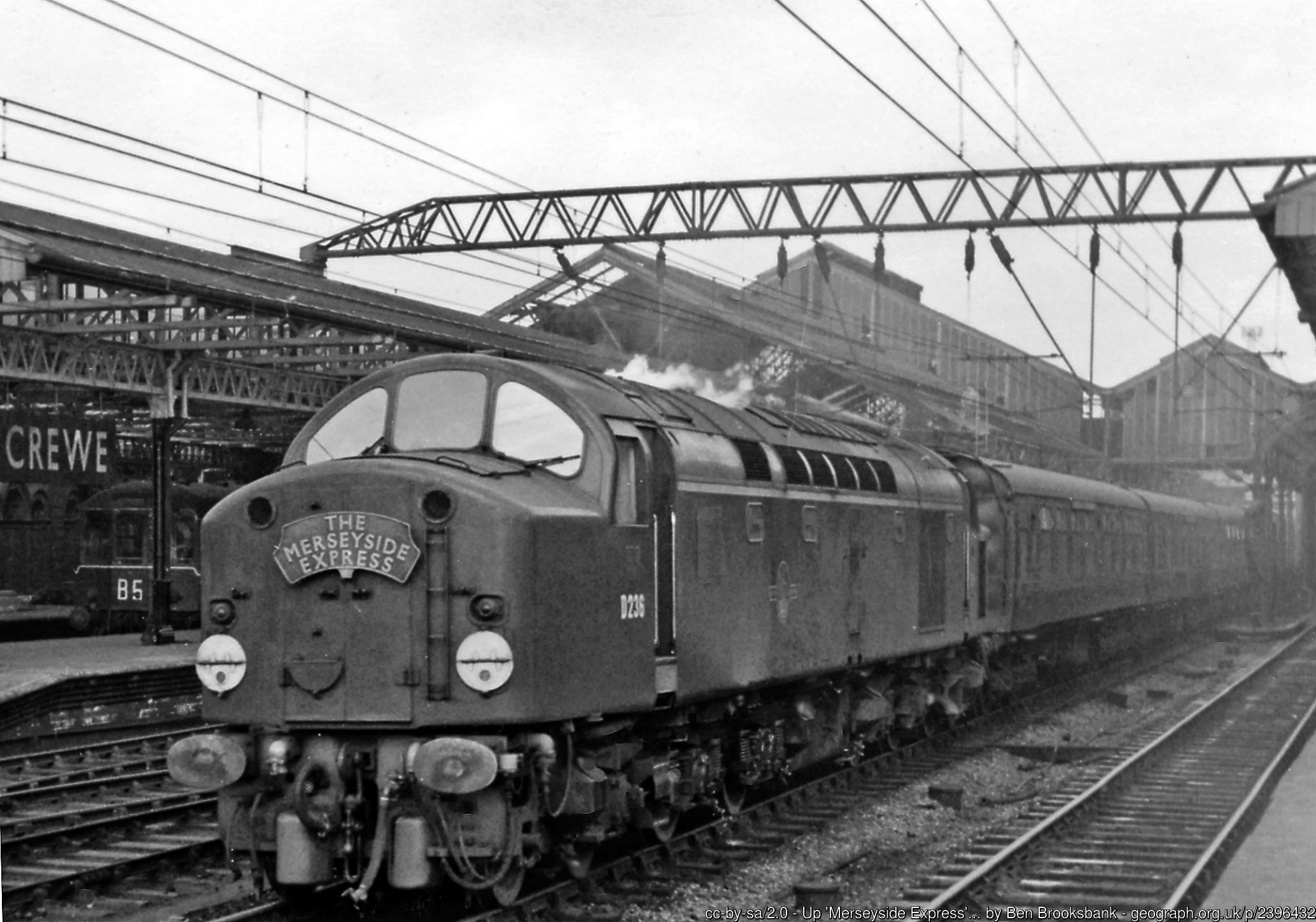
View northward, towards Liverpool, also Carlisle on the WCML, Manchester etc., in 1960 during the early stages of dieselisation of the principal trains on the WCML and soon after Crewe – Manchester had been electrified. Seen from Platform 5, running on the Up Through is No. D236 on the 10.05 Liverpool Lime Street – Euston ‘Merseyside Express’, an early candidate to be elevated to haulage, but not yet accelerated, by the new English-Electric 2,000 hp Type 4 1-Co-Co-1 Diesels (later Class 40).
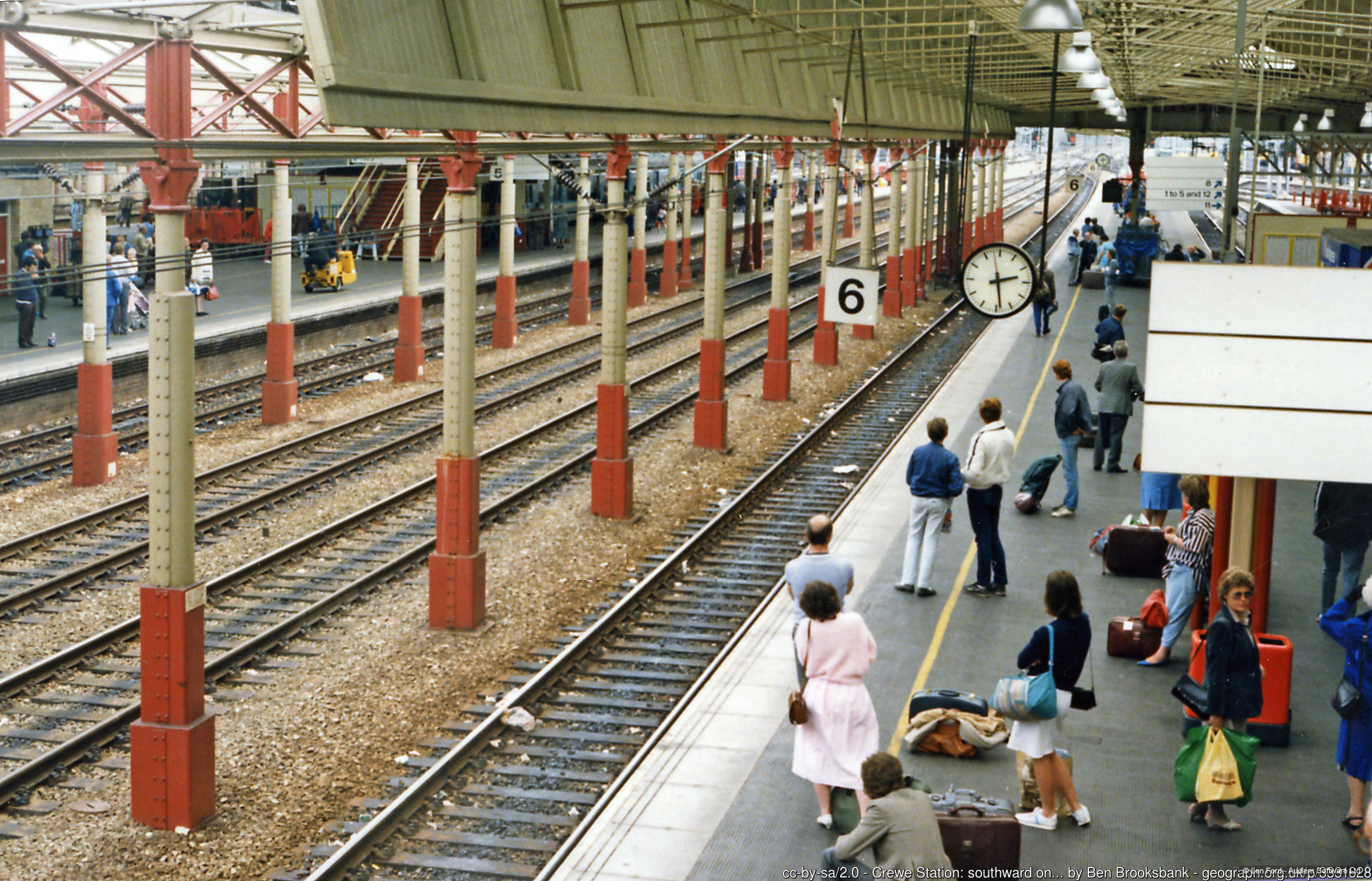
View southward from the footbridge on Platform 6, after the recent (1985)rationalisation and improvements.
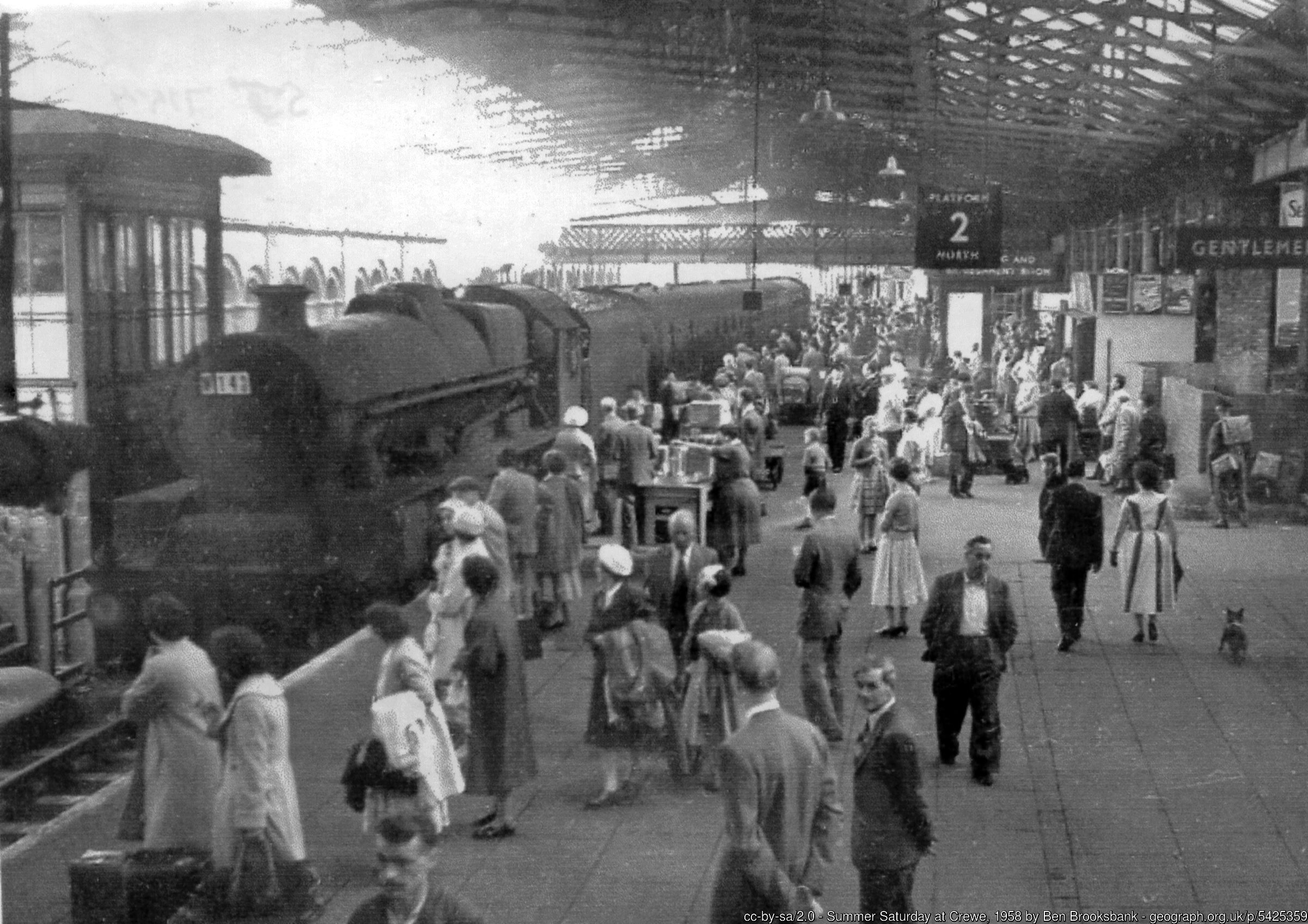
View southward on Platform 2, as the 13.05 Euston – Glasgow enters, headed by Stanier ‘Jubilee’ No. 45599 ‘Bechuanaland’ (26/1/35 – 15/8/64). On the left is Crewe Station ‘A’ signal-box. (Note also how beautifully dressed the women were in those days).
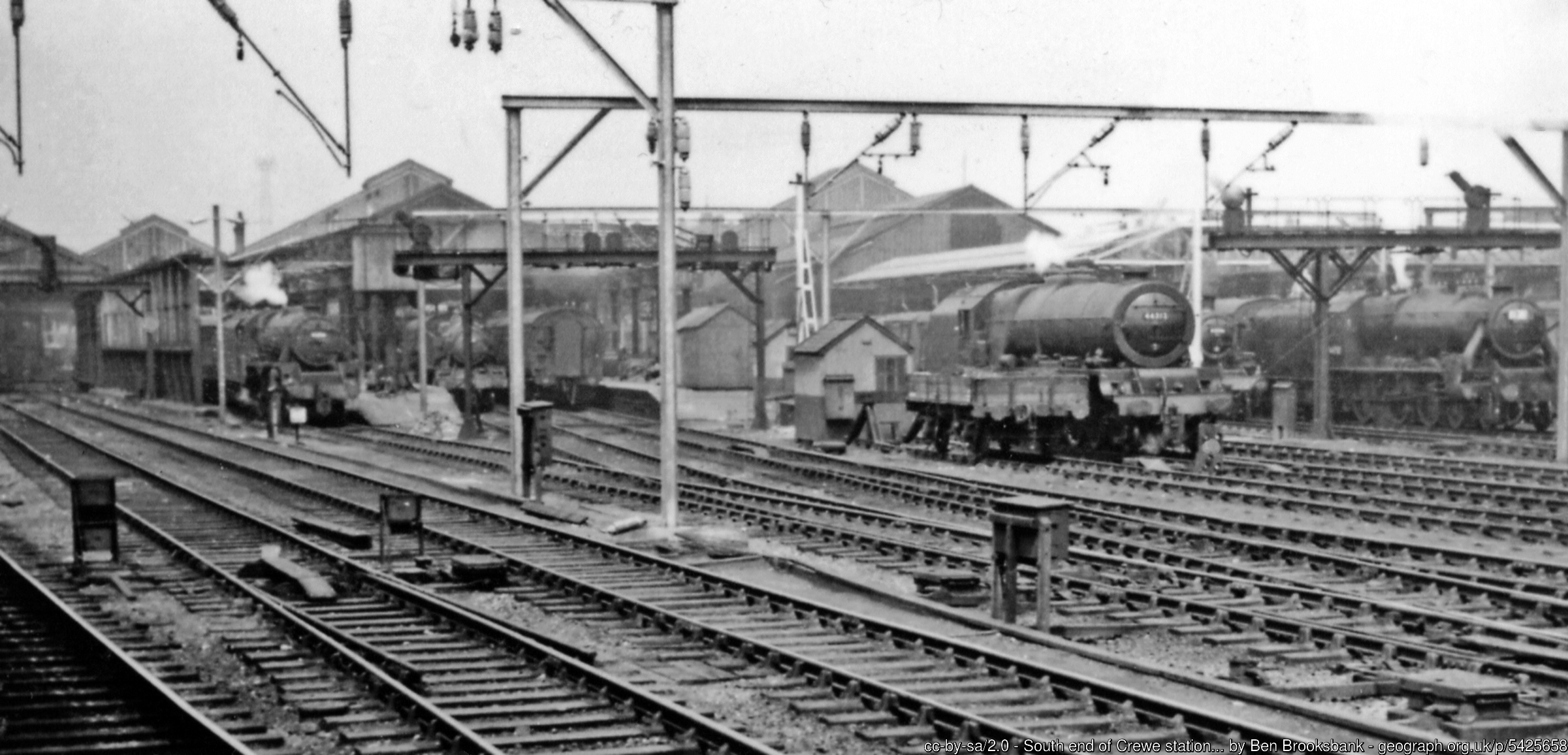
View NE from Platform 3, with the first stage of WCML electrification (Manchester – Crewe) under way. Engines visible include Black 5s Nos. 44750 and 45056, GW 2-6-2T No. 4120, ‘Princess Royal’ 4-6-2 No. 46212, and BR Class 2 2-6-0 No. 78030.
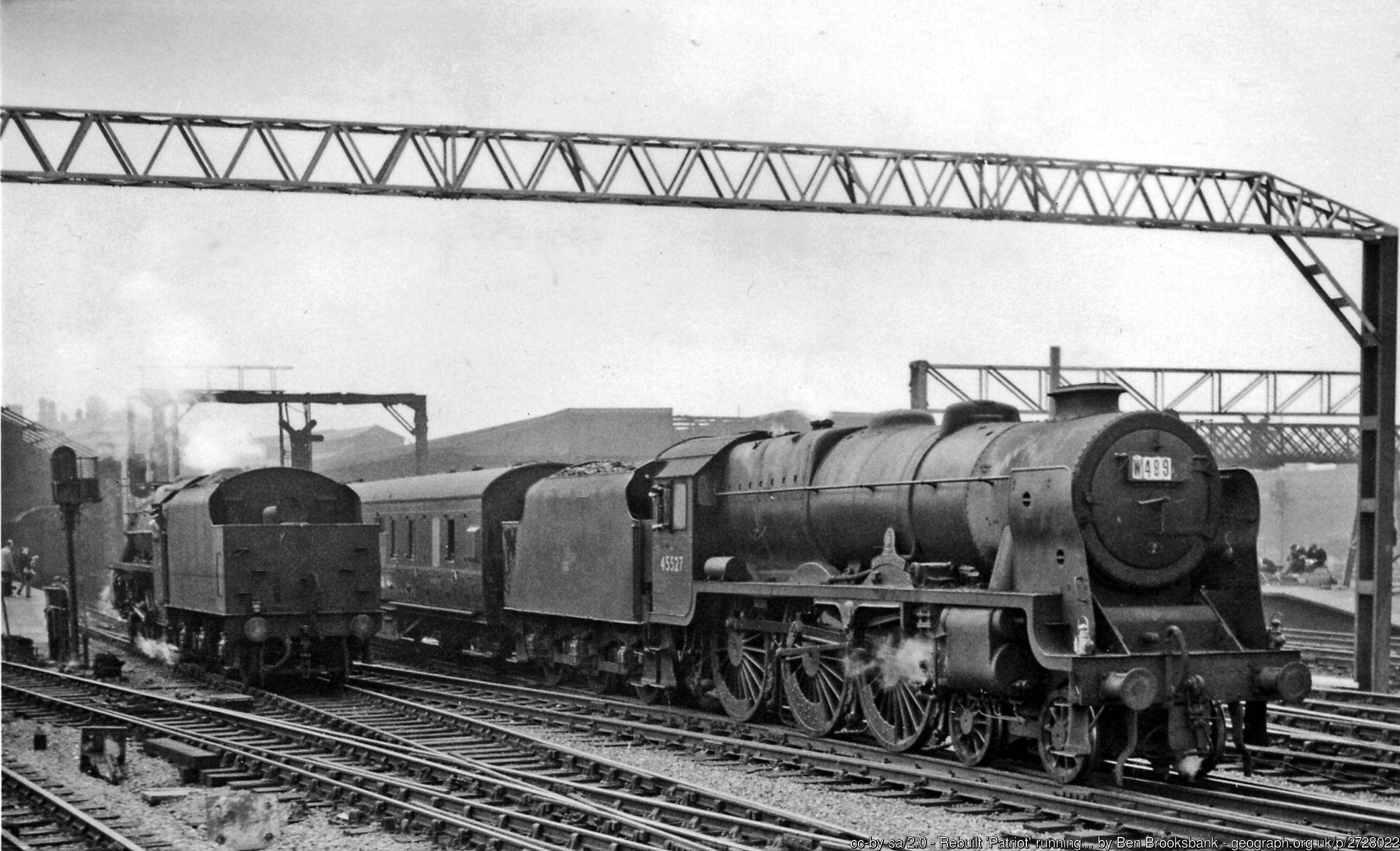
View NE from the south end of the station: WCML major junction. A scene taken in June 1959 when steelwork was already erected for the main-line electrification to Manchester the following year. The Rebuilt ‘Patriot’ is No. 45527 ‘Southport’ (built 4/33, rebuilt 9/48, withdrawn 12/64). On the left is Stanier ‘Black 5’ No. 45282.
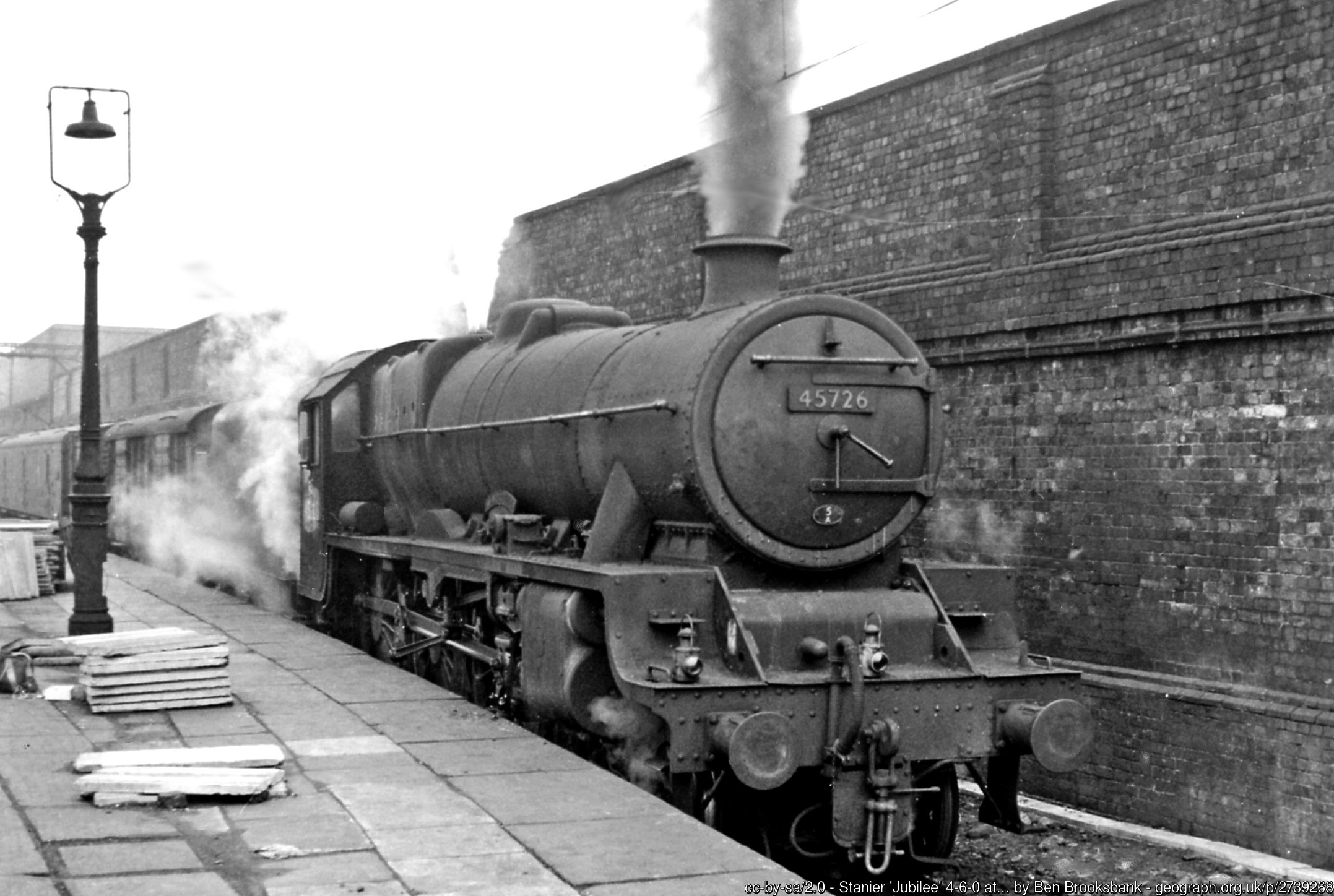
View northward at the south end of (probably) Platform 6, Crewe: major junction on the WCML. No. 45726 ‘Vindictive’ (built 10/36, withdrawn 3/65) shows well the filthy state many engines descended to in the 1960s.
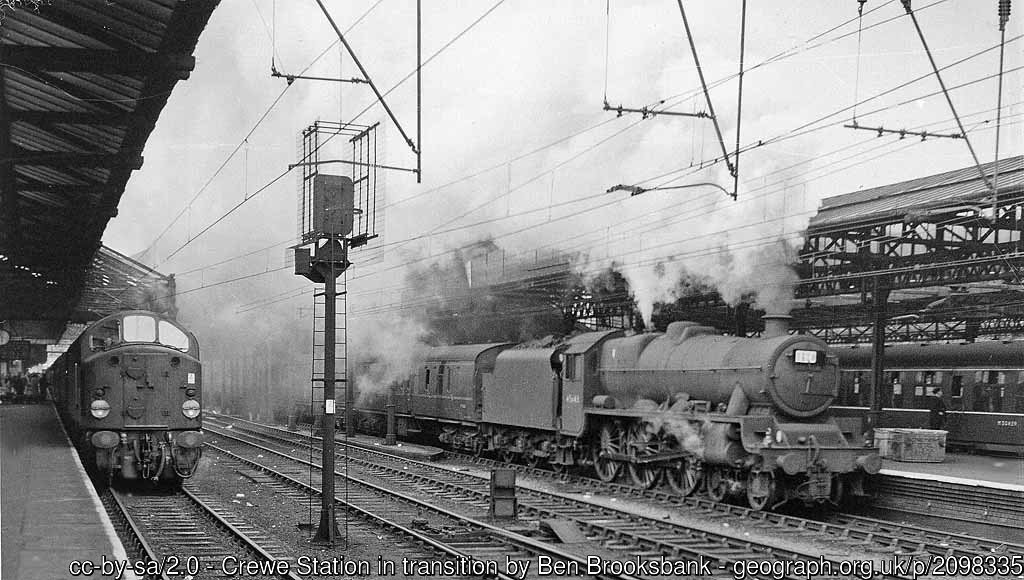
View northward on Platform 4, where English-Electric Type 4 Diesel No. D227 is heading the Up Midday Scot (13.30 Glasgow – Euston), while across at Platform 5 is LMS ‘Jubilee’ 6P 4-6-0 No. 45643 ‘Rodney’ on the 16.50 Liverpool to Birmingham. Crewe station is wired up for the already electrified services to Manchester and Liverpool.
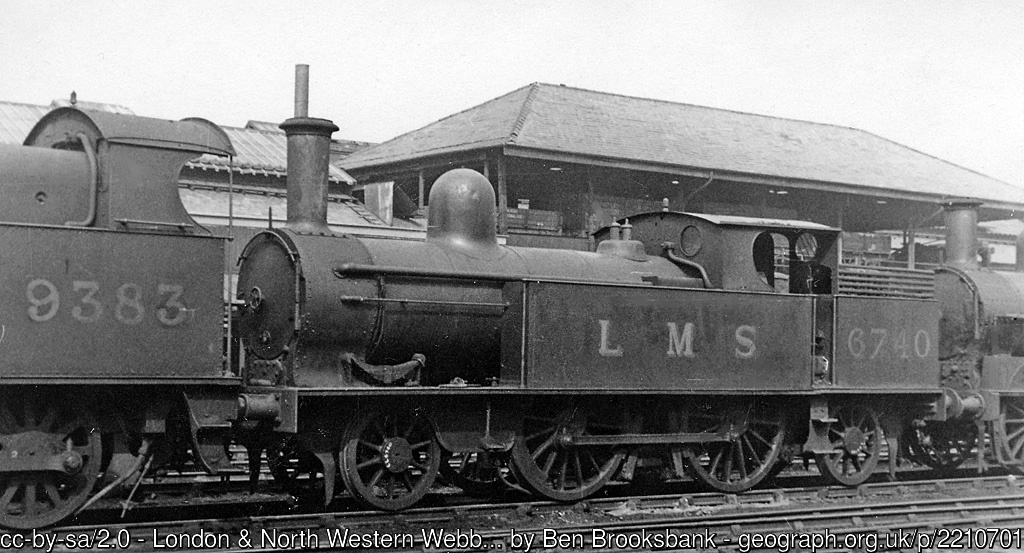
With an 0-8-0 in front and an 0-6-0 behind, 5’6″ 1P 2-4-2T No. 6740 awaits its fate at Crewe Works in 1948. These 2-4-2Ts had been common motive power on LNW branch lines in the previous 50 years or so. A line of locomotives awaiting scrapping seems to have been near the Iron Foundry, but I am uncertain of the precise location in the Works complex.
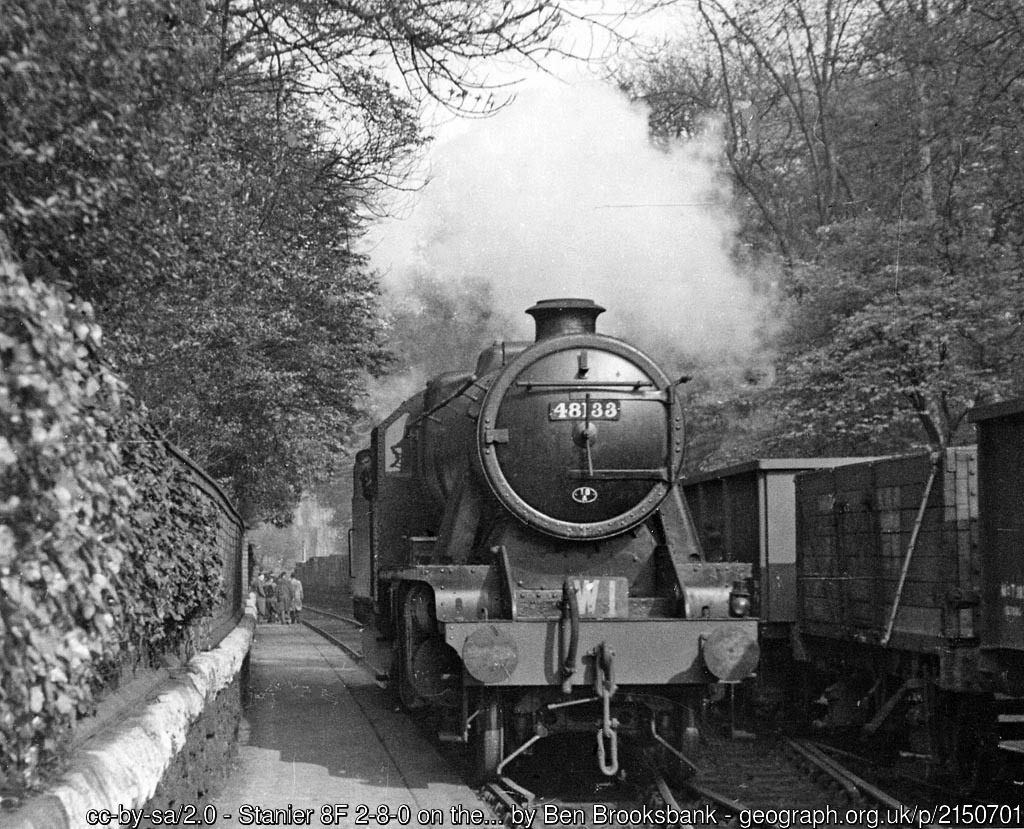
Believe it or not, this IS in Crewe Works. The 2-8-0, No 48133 (built 1941, withdrawn 11/66) is on Works Pilot job W1, is running on the ‘Deviation Line’ (originally the main Crewe – Chester line before the great expansion of the Works in July 1878. The view is eastward, between Flag Lane and Chester bridges. The occasion was a visit by the Railway Correspondence & Travel Society; some of my companions can be glimpsed ahead, outside the entrance to the General Offices
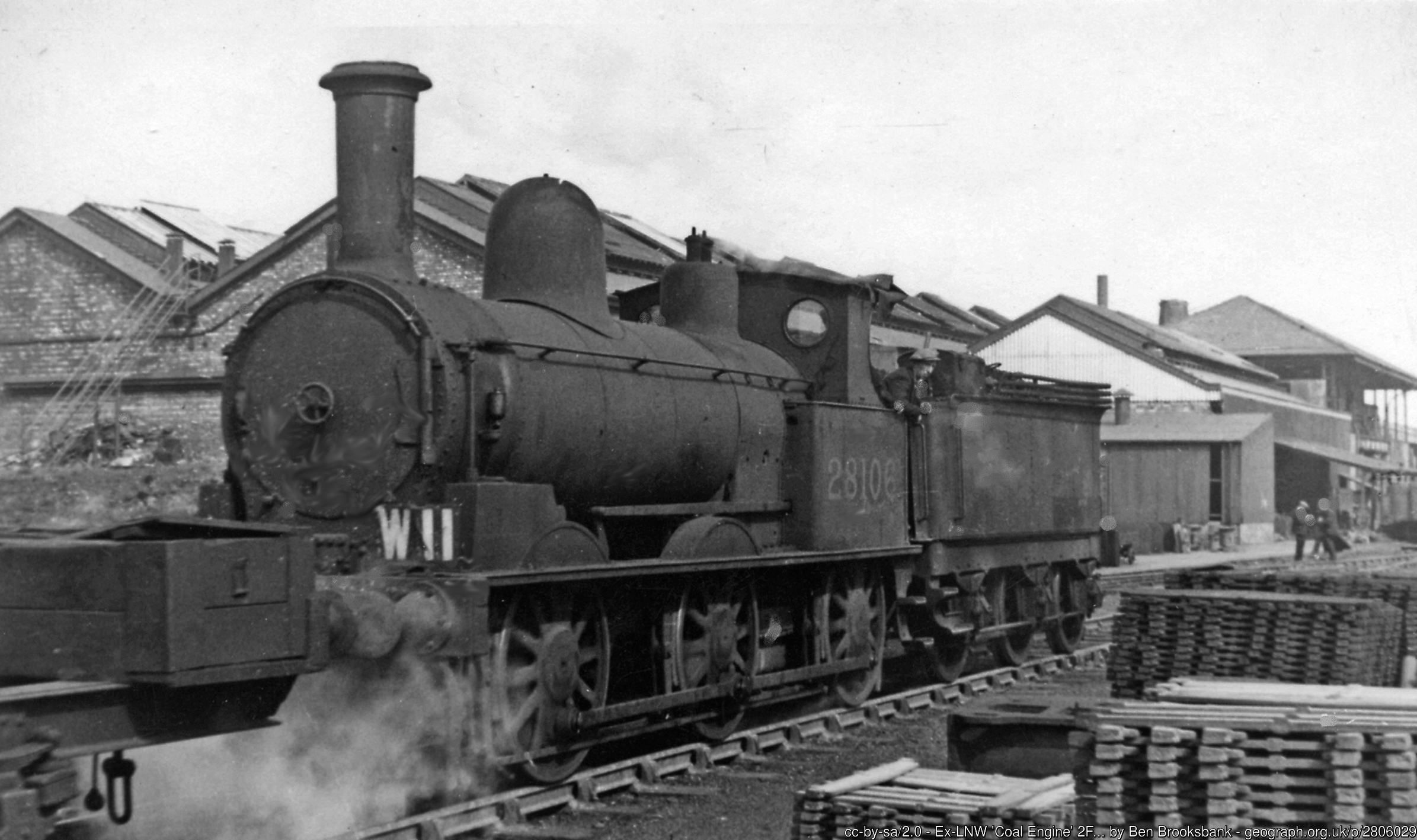
One of the few survivors of an original 500 Webb 17″ 2F 0-6-0 ‘Coal Engines’, No. 28106 became BR No. 58326 and survived to be one of the last in 5/53. [See SJ6955 : Ex-L&Y 0-6-0 as a Crewe Works Pilot regarding my uncertainty of precise locations in Crewe Works].
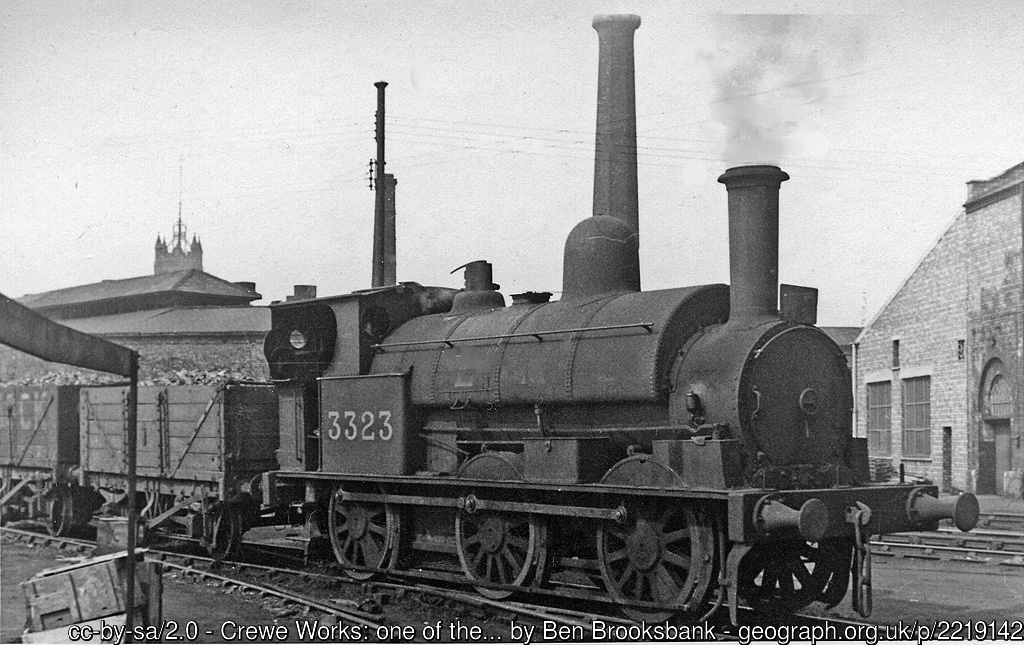
This ex-LNW 2F ‘Special’ 0-6-0 saddle-tank had been so long on the Chief Mechanical Engineer’s stock of Works shunters that it retained its LNW No. 3323 and kept it until condemned in 1954.
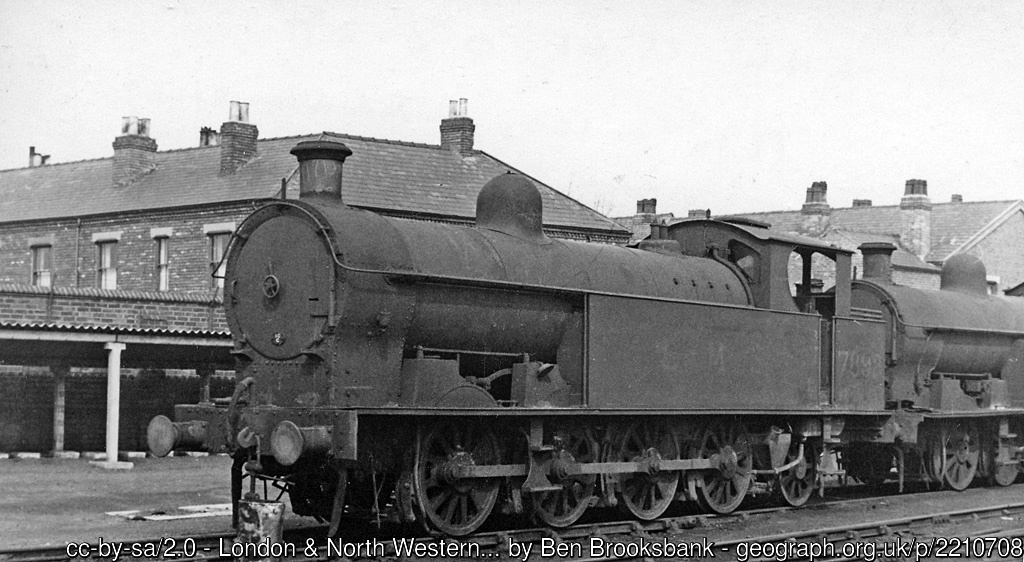
Heading a line of ex-LNW locomotives awaiting scrap is 0-8-2T No. 7892, which had spent it much of its life shunting in the marshalling yard at Speke, near Liverpool. (See also SJ6955 : London & North Western Webb 2-4-2T on Scrap Line at Crewe Works).
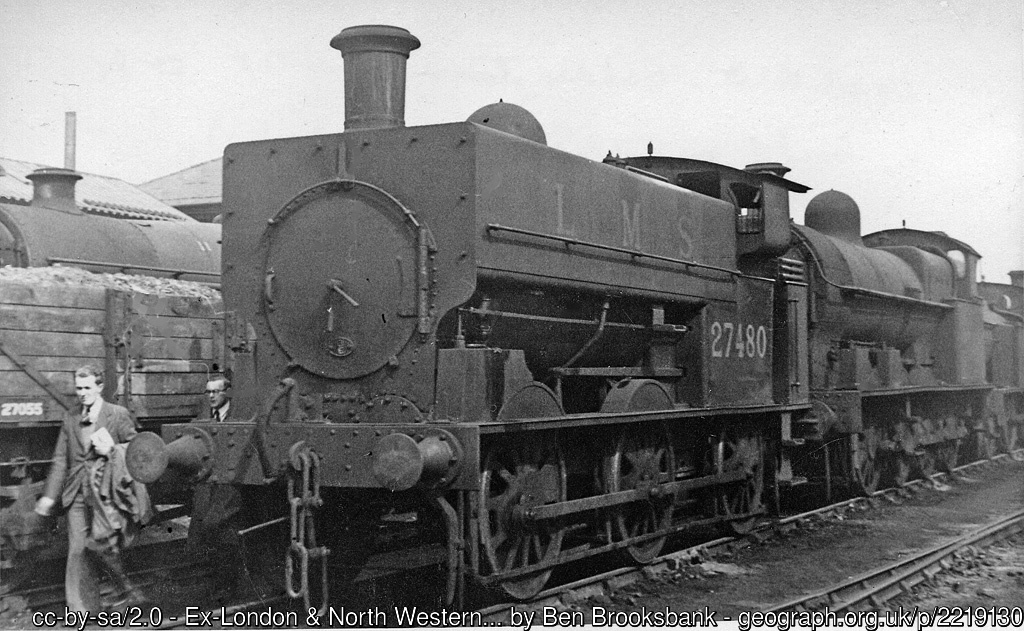
Although lined up with other condemned engines, No. 27480, which was converted from a tender engine, was still working as a Crewe Works shunter and not withdrawn until the end of 1948. (Passing beside it are two of my fellow-visitors to the Works on that memorable day).
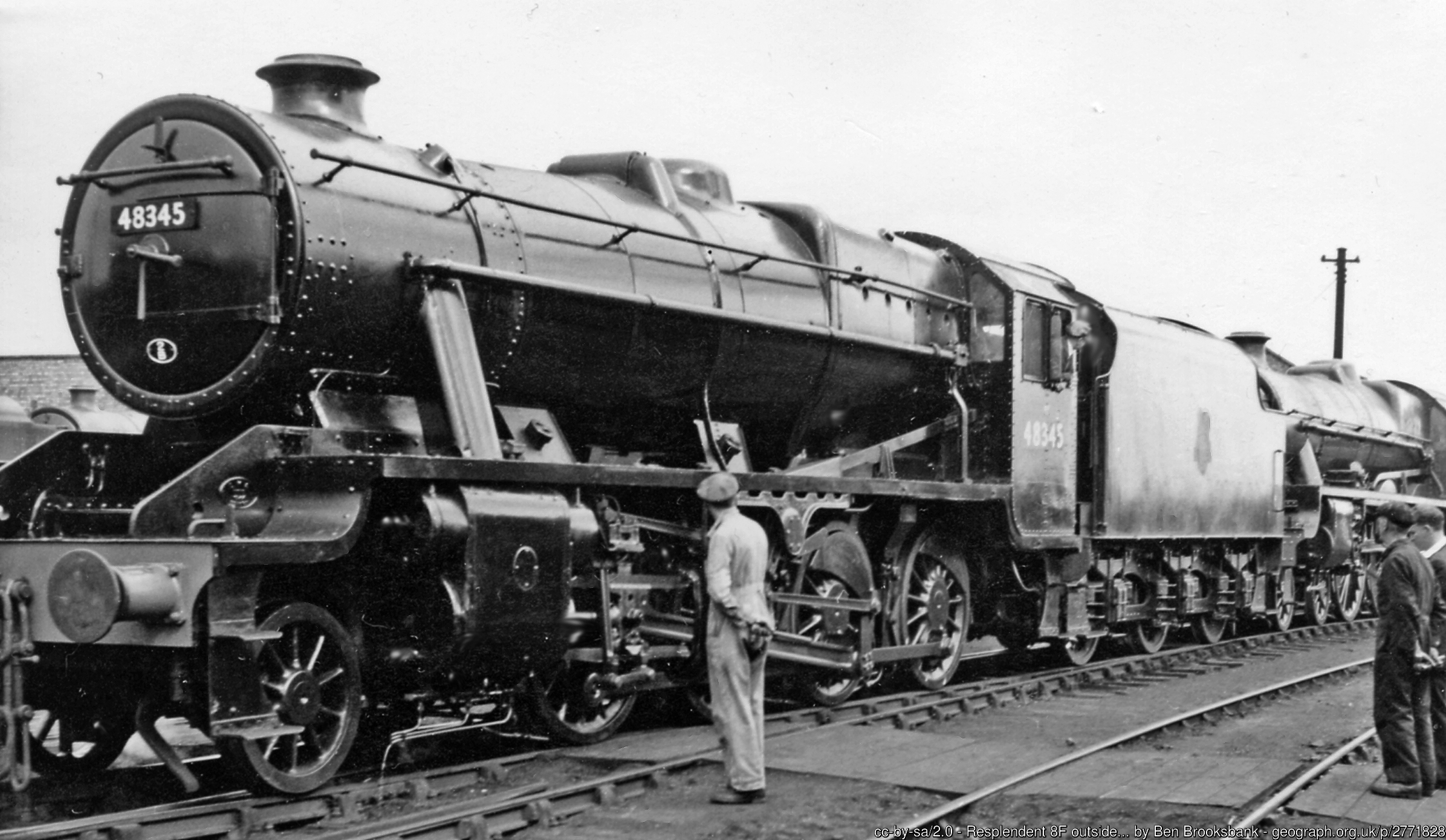
Stanier 8F 2-8-0 No. 48345 (built early 1944, not withdrawn until 3/68) repainted after repair in 1958 – seems to be being admired. Behind it is ‘Jubilee’ 4-6-0 45685 ‘Barfleur’.
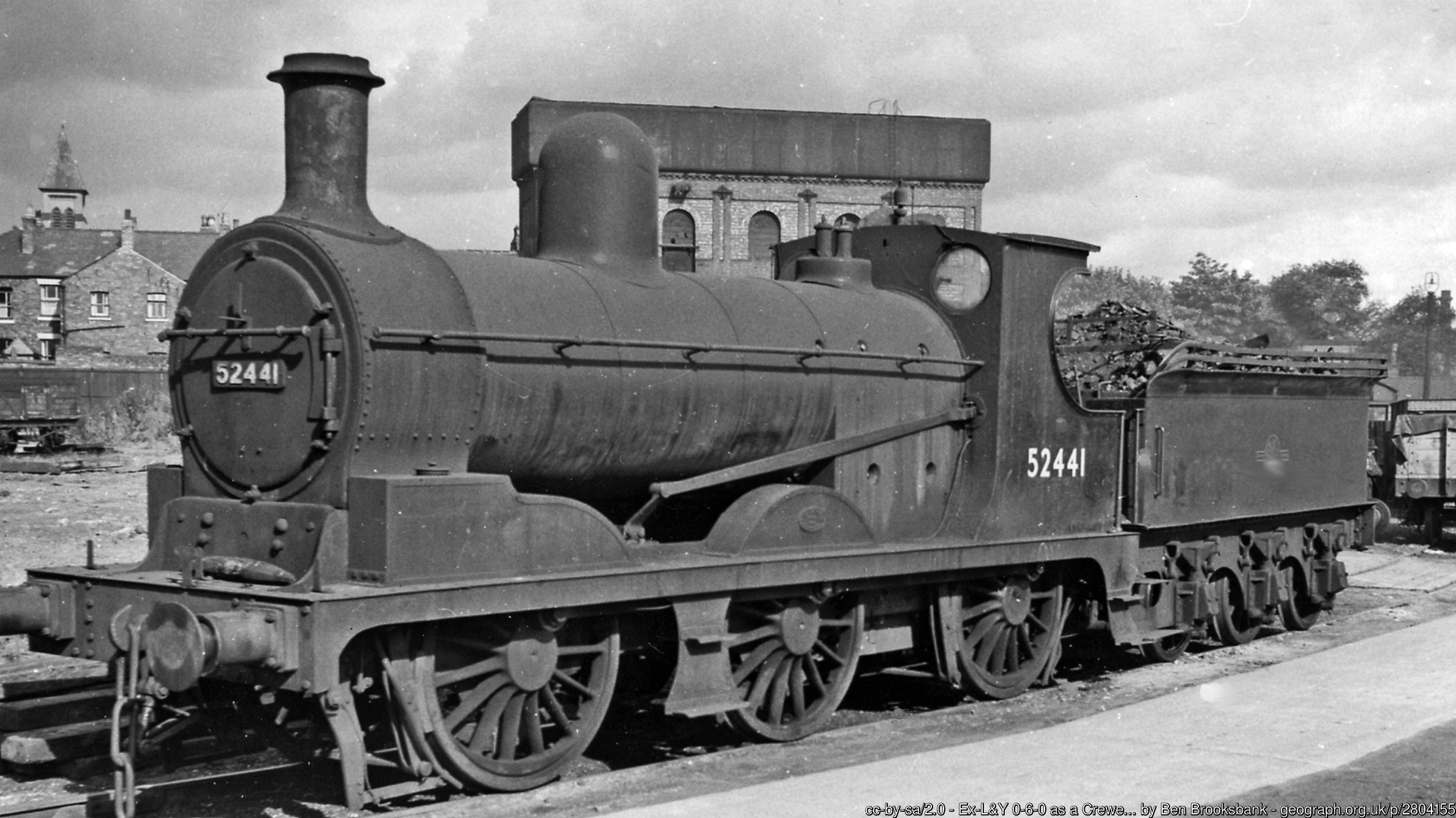
Aspinall 27 Class 3F 0-6-0 No. 52441 (built 1890s, withdrawn 9/62) was employed in its final years as one of the several Crewe Works Pilots. [N.B.: I need help, please, with the precise location of my several images taken at Crewe Works, because I don’t have a contemporary large-scale plan of the Works complex?]
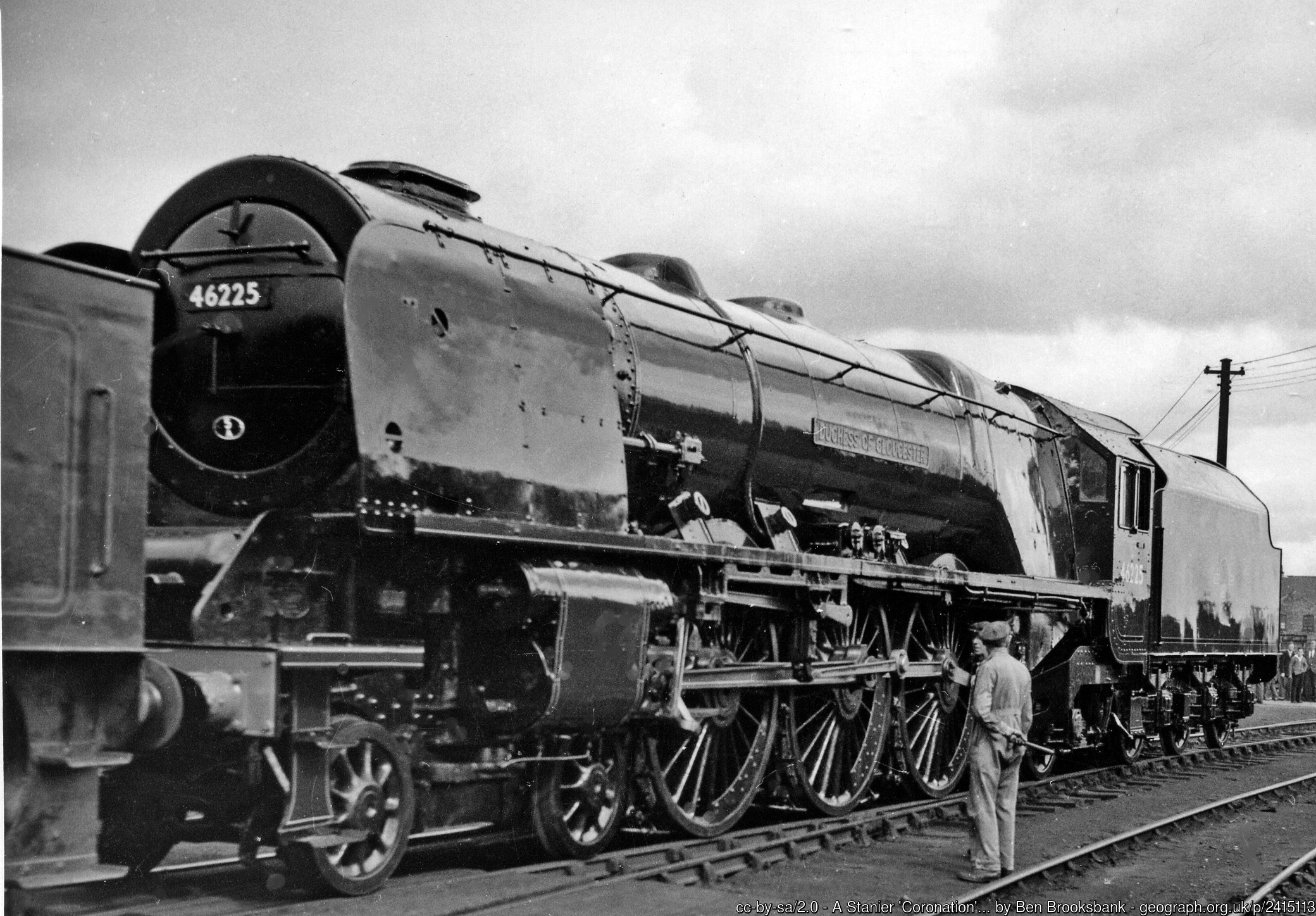
Outside the Paint Shop at the great Crewe Works, 4-6-2 No. 46225 ‘Duchess of Gloucester’, stands one of the earlier of Sir William Stanier’s incomparable design, introduced in streamlined form in 1937, de-streamlined in 1947. Is the man admiring his handiwork?
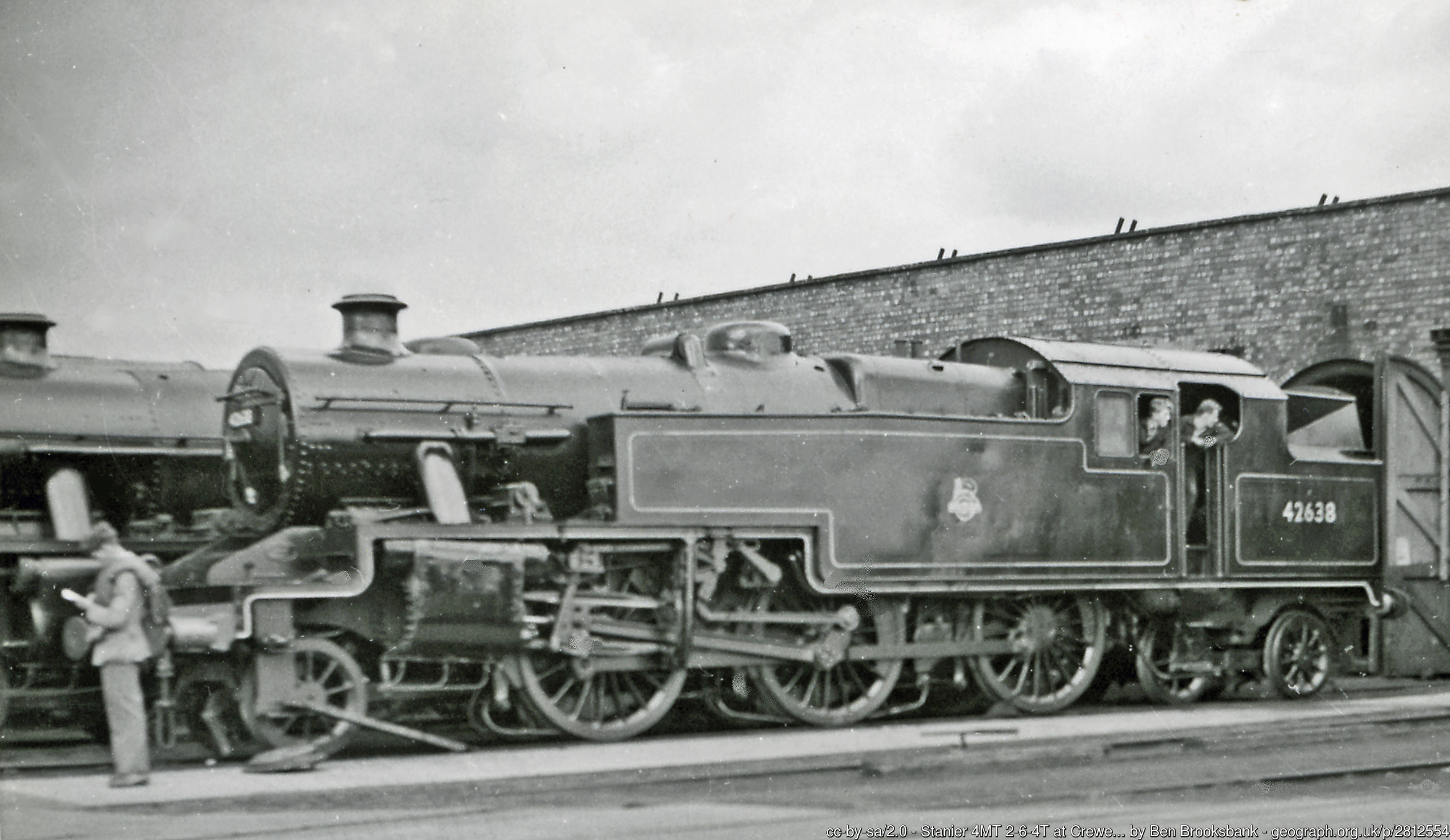
Resplendent outside the Paint Shop (see also SJ6955 : Resplendent 8F outside Paint Shop at Crewe Works etc., and SJ6955 : Ex-L&Y 0-6-0 as a Crewe Works Pilot re uncertainties of location) is No. 42638 (built 1938, withdrawn 12/62). [On August 6th 1958 I went on the public annual Special Excursion from London to visit Crewe Works – on a weekday, which was specially interesting].
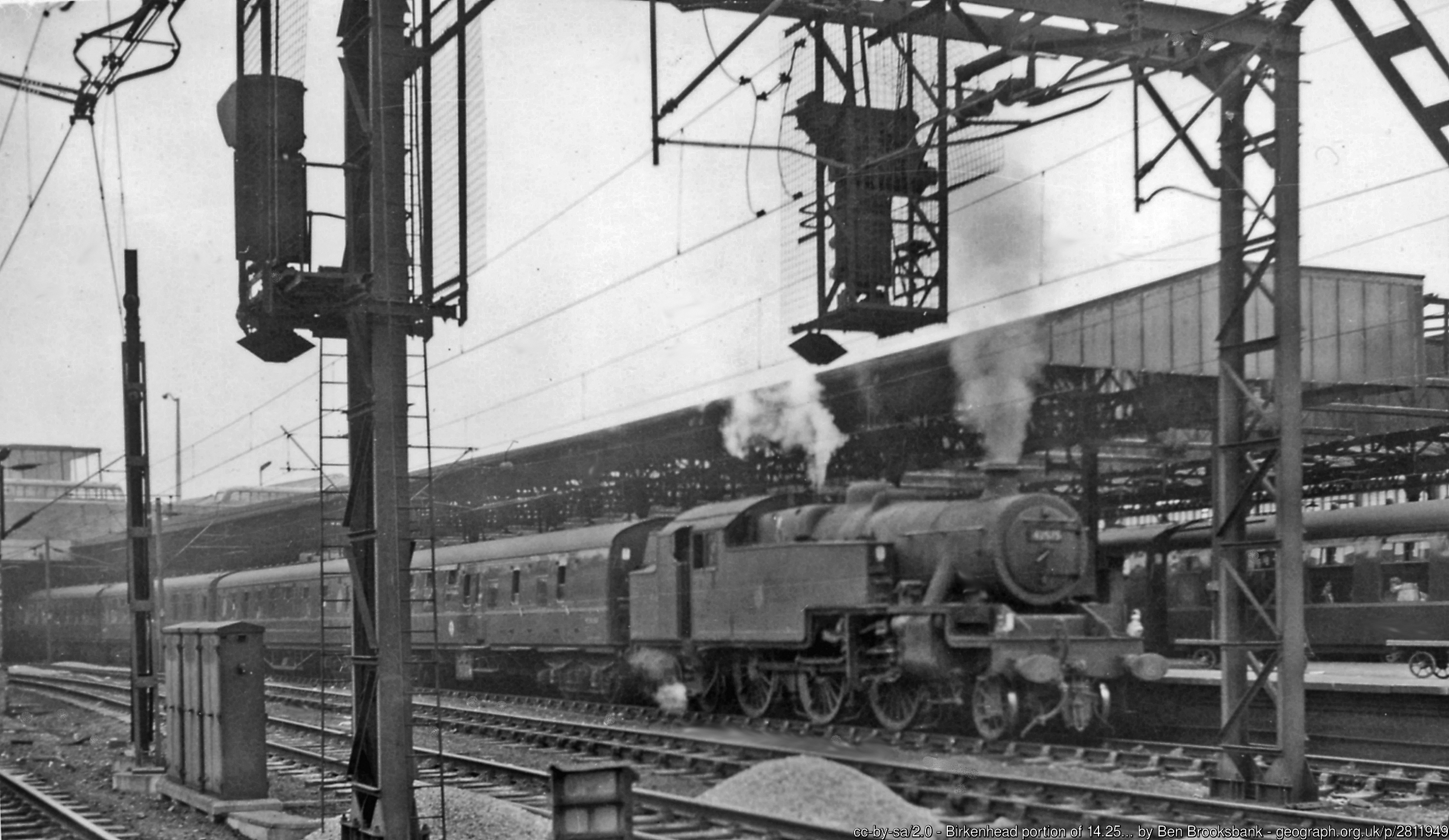
View SW, towards London and the South: WCML etc. The main part of the 14.25 Euston – Liverpool has gone ahead, leaving the Birkenhead portion to follow via Chester, behind Stanier 4MT 2-6-4T No. 42575 (built 1936, withdrawn 10/62 – only six months after this). With electric trains now working from Crewe to Manchester and to Liverpool, the gantries and wires are very prominent.
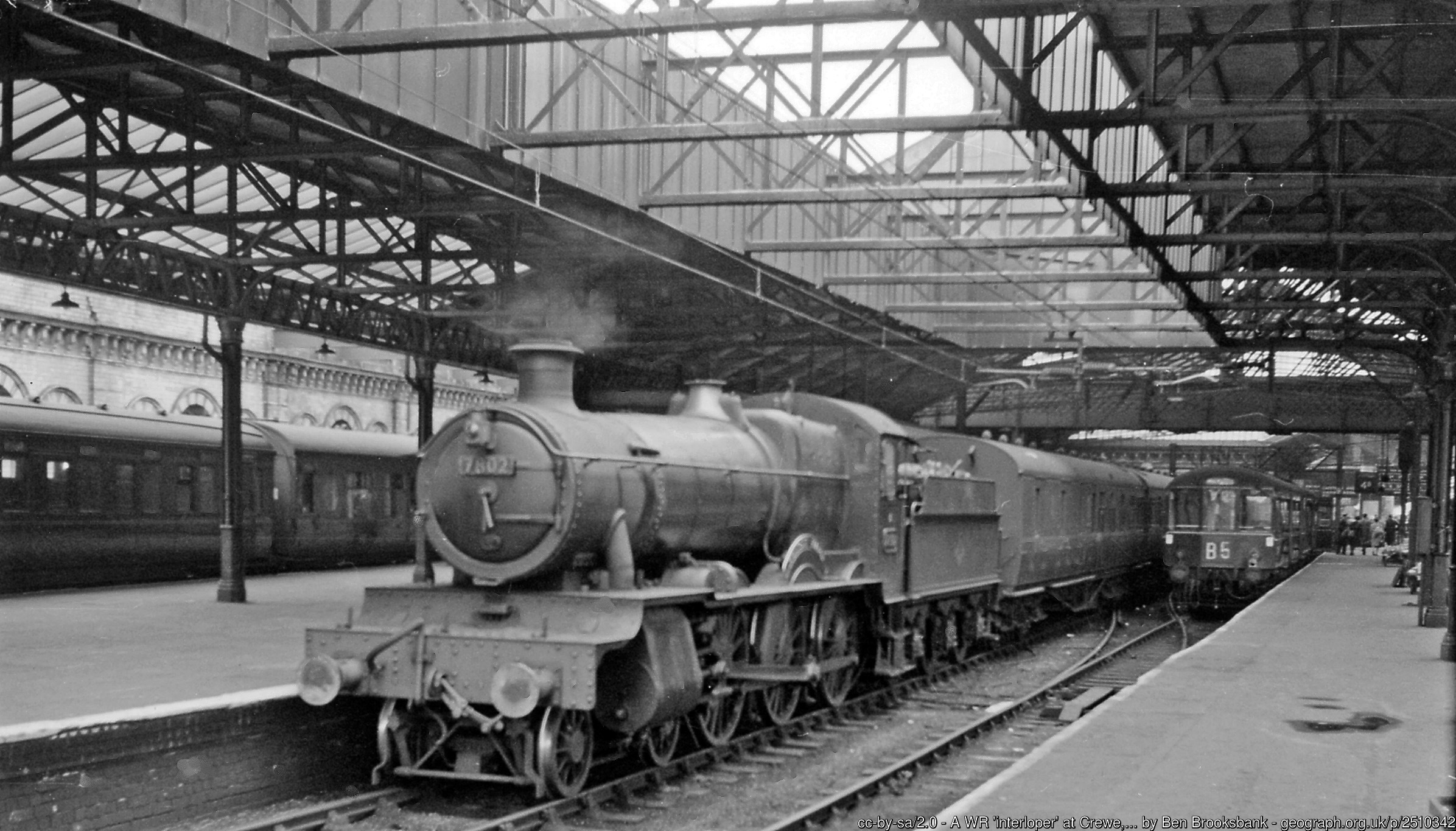
View northward to Bay Platform 3 at Crewe Station. A stopping train to Wellington via Market Drayton (ex-GW line branching off at Nantwich) is headed by 4-6-0 No. 7802 ‘Bradley Manor’ (built 1/38, withdrawn 10/65 and preserved, being currently in active service on the Severn Valley Railway). In Bay Platform 4 is a dreary DMU, perhaps headed for Shrewsbury.
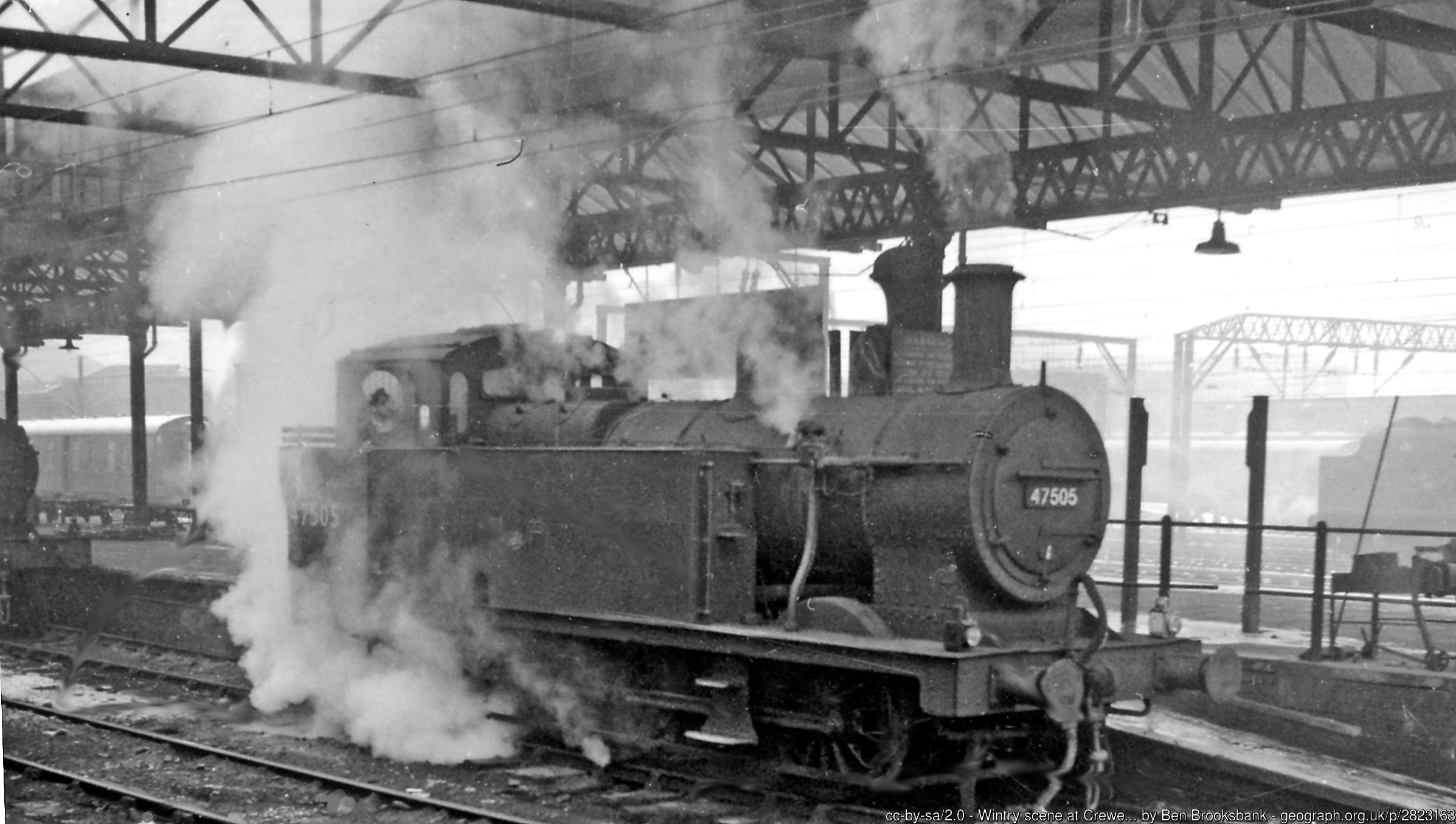
View NE at the south end of Crewe station, with one of the pilots seen at work, LMS Fowler 3F 0-6-0T No. 47505, which was built in 1928 as No. 16588 and withdrawn in 8/65 as a Crewe Works shunter. On a cold December day, electrification masts abound as the line to Manchester was already electric and that to Liverpool will be within the week.
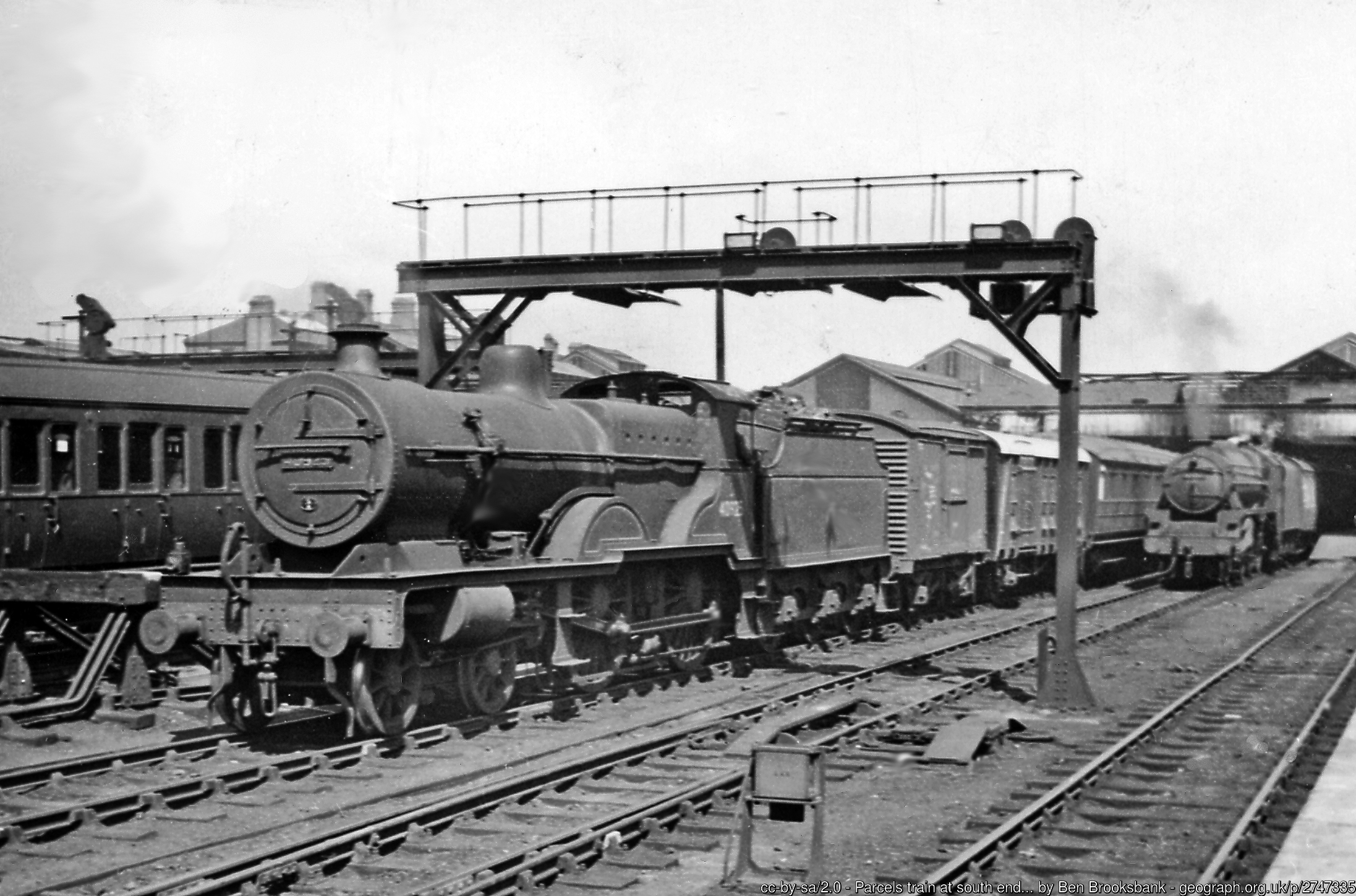
View northward at about Platform 6: WCML major junction. Featured is Fowler 6’9″ Compound 4-4-0 No. 40925 (built 1925, withdrawn 12/59); a Stanier 5MT 4-6-0 stands on another road.
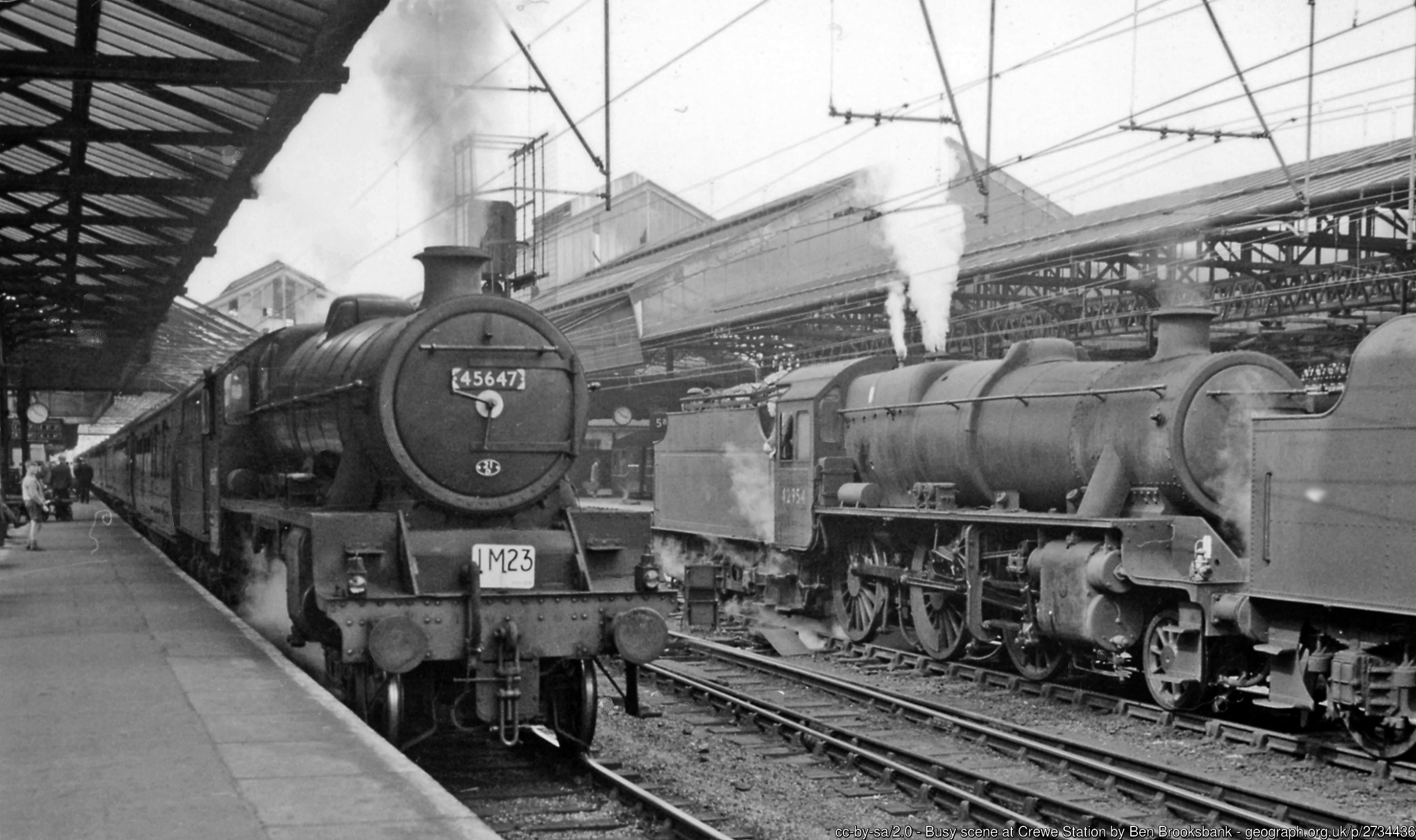
View northward along Platform 4 at Crewe: major junction on the WCML. Stanier ‘Jubilee’ 6P 4-6-0 No. 45647 ‘Sturdee’ (built 1/35, withdrawn 4/67) is calling with the Saturdays Only 10.10 Edinburgh Princes Street – Birmingham New Street, while two locomotives coupled run on the Up Through from Crewe North Shed to take up southbound trains, the second being Stanier 5MT 2-6-0 No. 42954 (built 1933, withdrawn 2/67 – the last of its class). Main-line electrification had been in operation for a year, but so far only from Manchester Piccadilly.
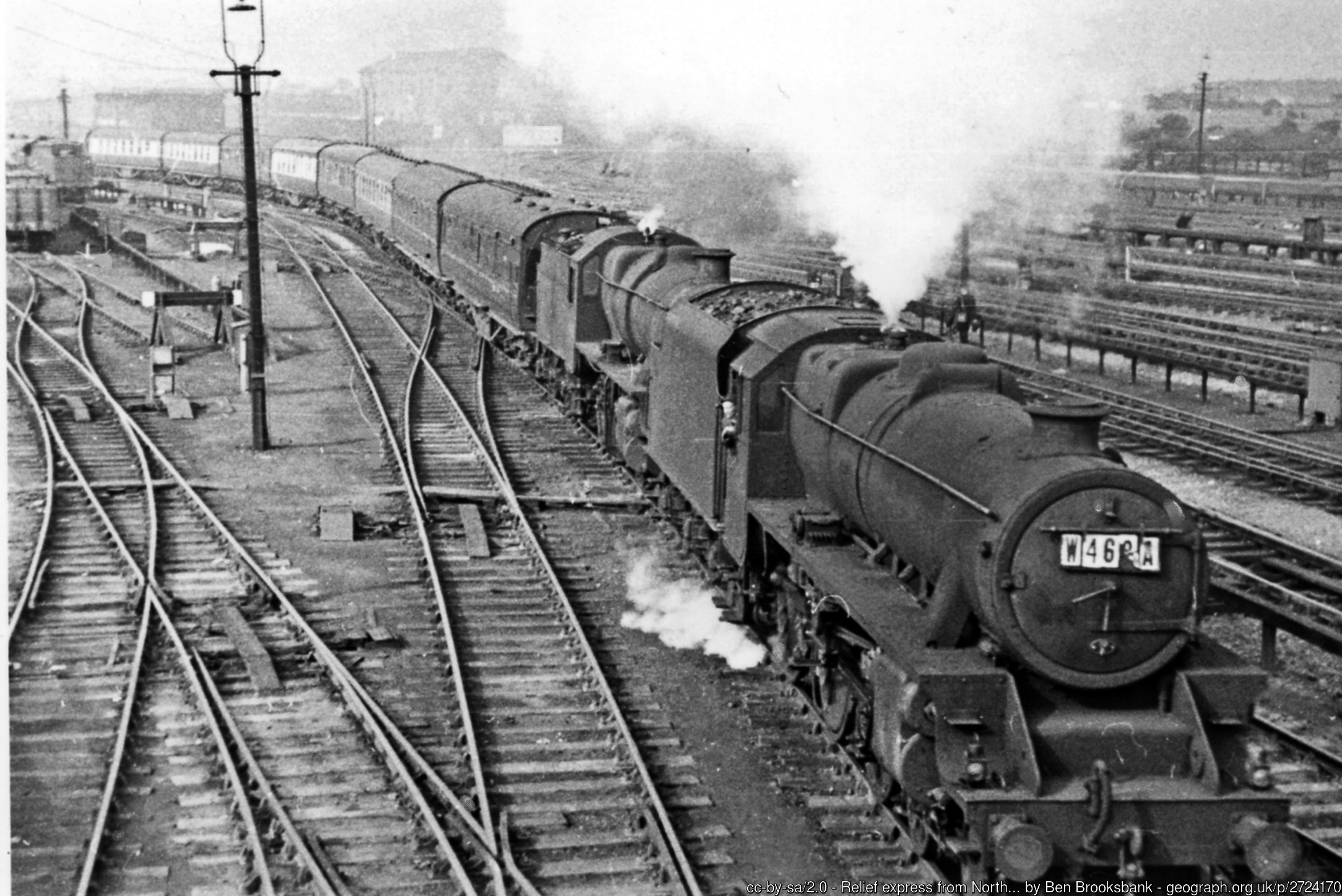
EView northward, towards the North by the WCML, on the left towards Chester and to the right towards Manchester: ex-LNWR major junction. This Up train is seen from the footbridge crossing from the Chester line the other lines at Crewe North Junction and passing Crewe North Locomotive Depot; unseen underneath are the Independent Lines conveying most of the freight traffic. The 13.40 Llandudno – Derby is headed by Stanier 5MT 4-6-0 No. 45416 (built 1937, withdrawn 7/65) piloting Stanier 5MT 2-6-0 No. 42951 (built 1933, withdrawn 3/66);it will proceed from Crewe via Stoke-on-Trent.
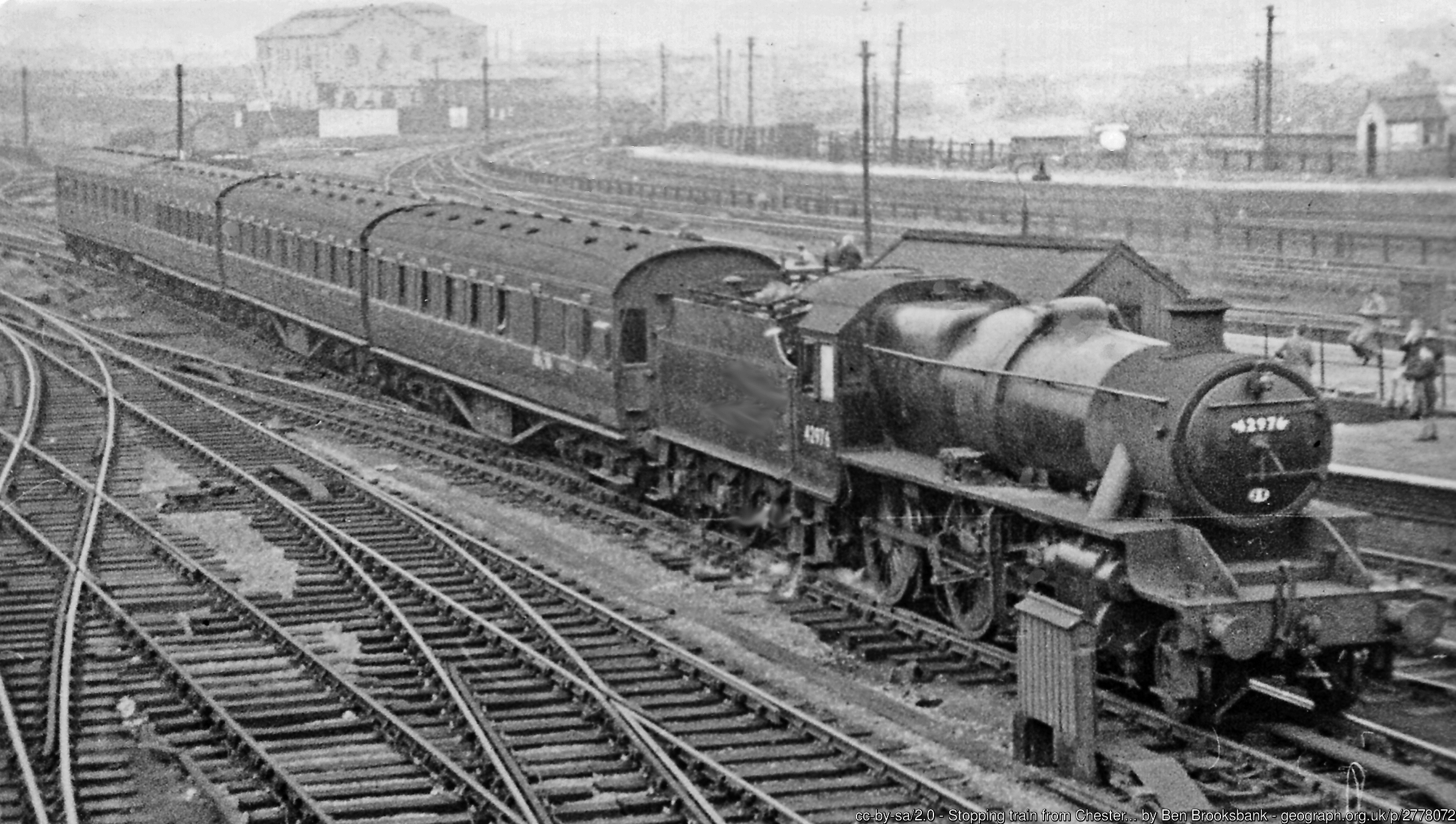
View northward from the north end footbridge, Crewe North Junction Box being just out of frame on the left. Stanier 5MT 2-6-0 No. 42976 (built 1934 as No. 13276, withdrawn 7/63) with its non-corridor train is crossing into No. 8 Bay. On the far side can be seen the lines to Manchester and the Horse Dock. (See also for example SJ7055 : Crewe 60 years ago: a Glasgow – Birmingham express arrives, greeted by excited train-spotter
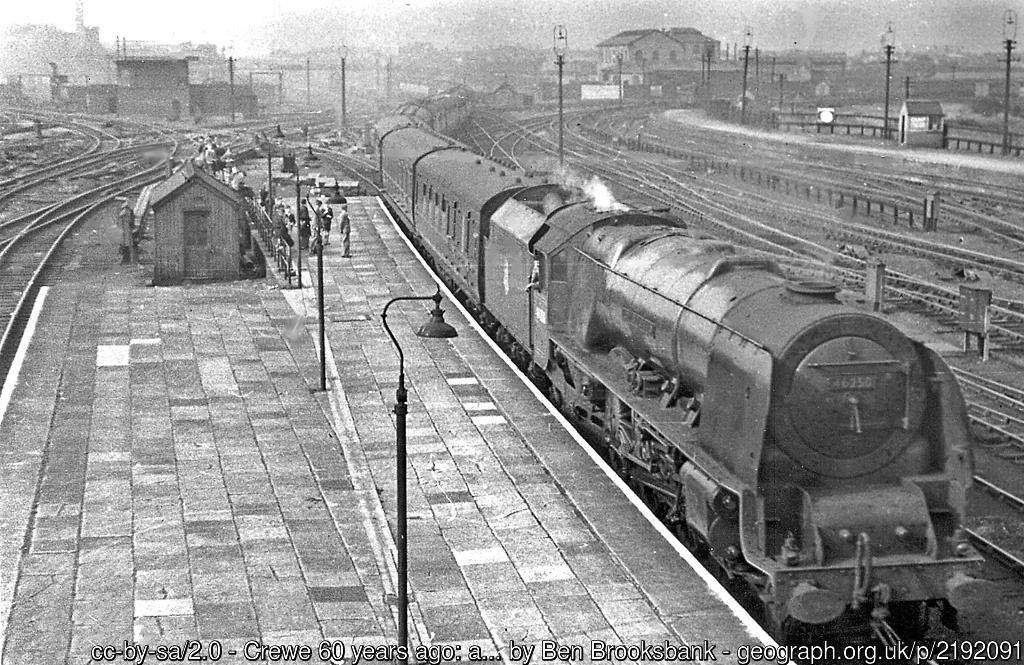
View northward from the footbridge at the north end; ex-London & North Western West Coast Main line. The 10.05 Glasgow Central to Birmingham New Street, headed by Stanier ‘Coronation’ 8P 4-6-2 No. 46250 ‘City of Lichfield’, is coming into Platform 4 across Crewe North Junction (see large signalbox, left background). On the right, the Manchester lines curve in past the Up Carriage Sidings and the Horse Dock; the lines on the left lead to Platforms 5 and 6. Over to the left are the lines to Chester.
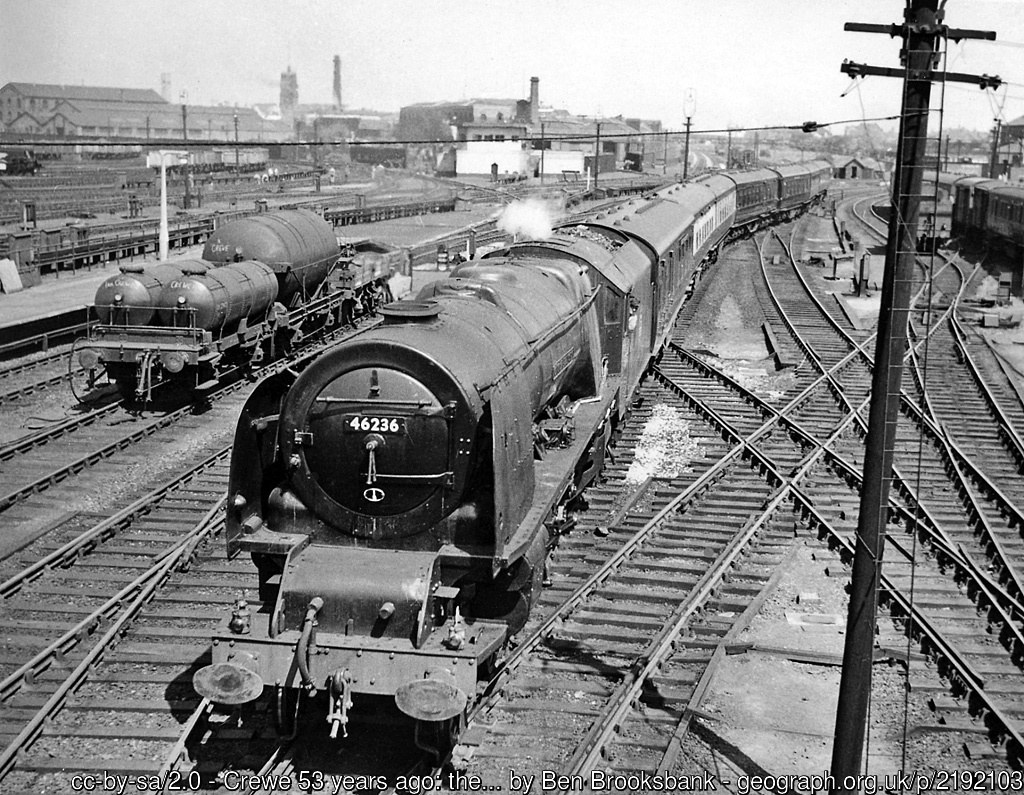
View northward from the footbridge, towards Manchester (to the right), Liverpool, Warrington and the North (centre) and Chester (left); ex-London & North Western West Coast Main Line and subsidiaries. Crewe North Junction signalbox is prominent in the centre and part of the Works is visible far left. The 10.15 Manchester London Road to Bournemouth West is headed by Stanier ‘Coronation’ 8P 4-6-2 No. 46236 ‘City of Bradford’. The mobile gas-cylinders are probably for replenishing the reservoirs on kitchen-cars.
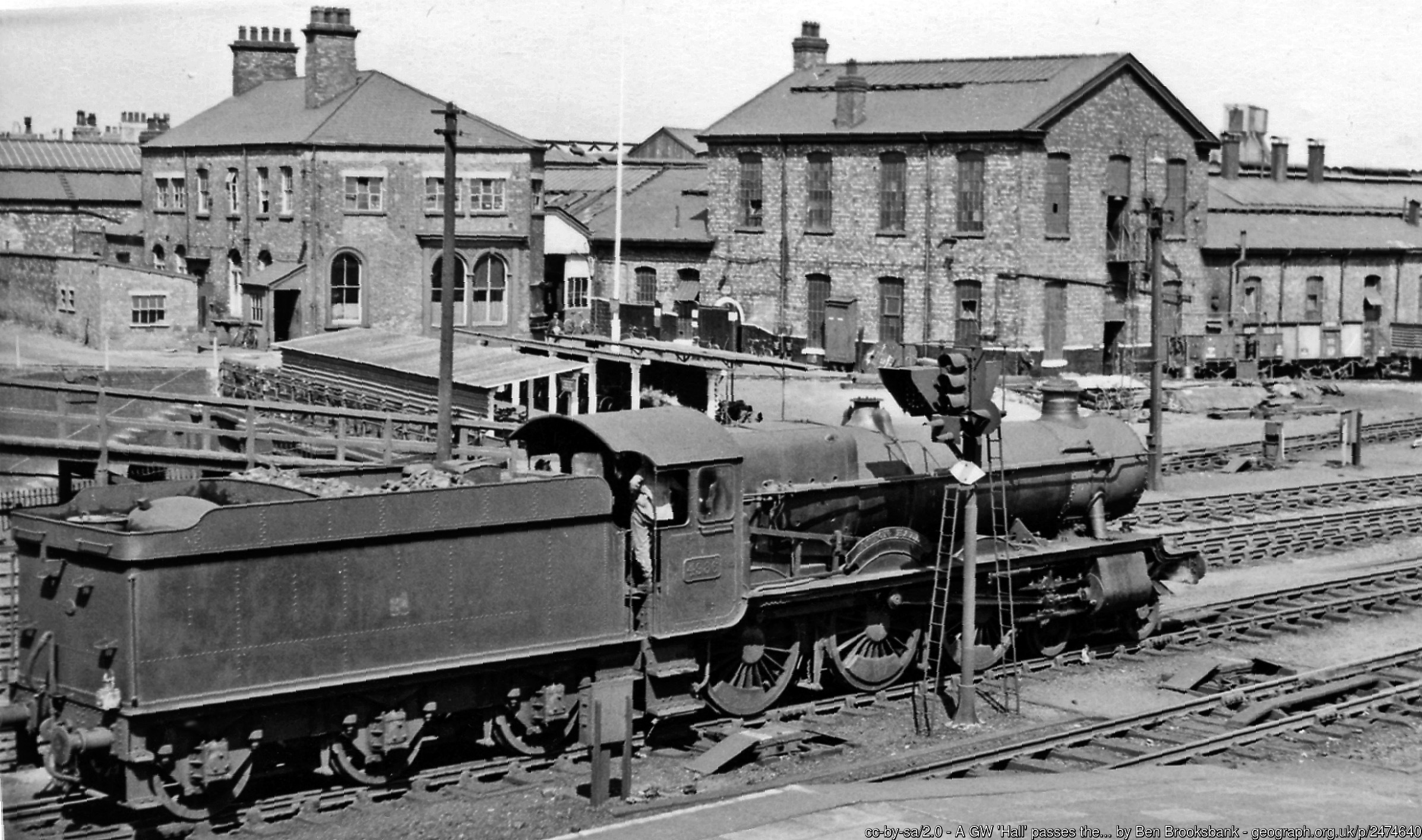
View NW from the footbridge leading into the Depot. A relative outsider in this stronghold of the former LNWR, ex-GW 4-6-0 No. 4986 ‘Aston Hall’ (built 1/31, withdrawn 5/62) is passing on the Down Through No. 1 line. GW locomotives, which worked into Crewe on the line from Wellington via Nantwich were normally serviced at Gresty Lane Depot to the SW of Crewe station, but this one seems to be visiting the LMS (ex-LNW) Crewe North Depot.
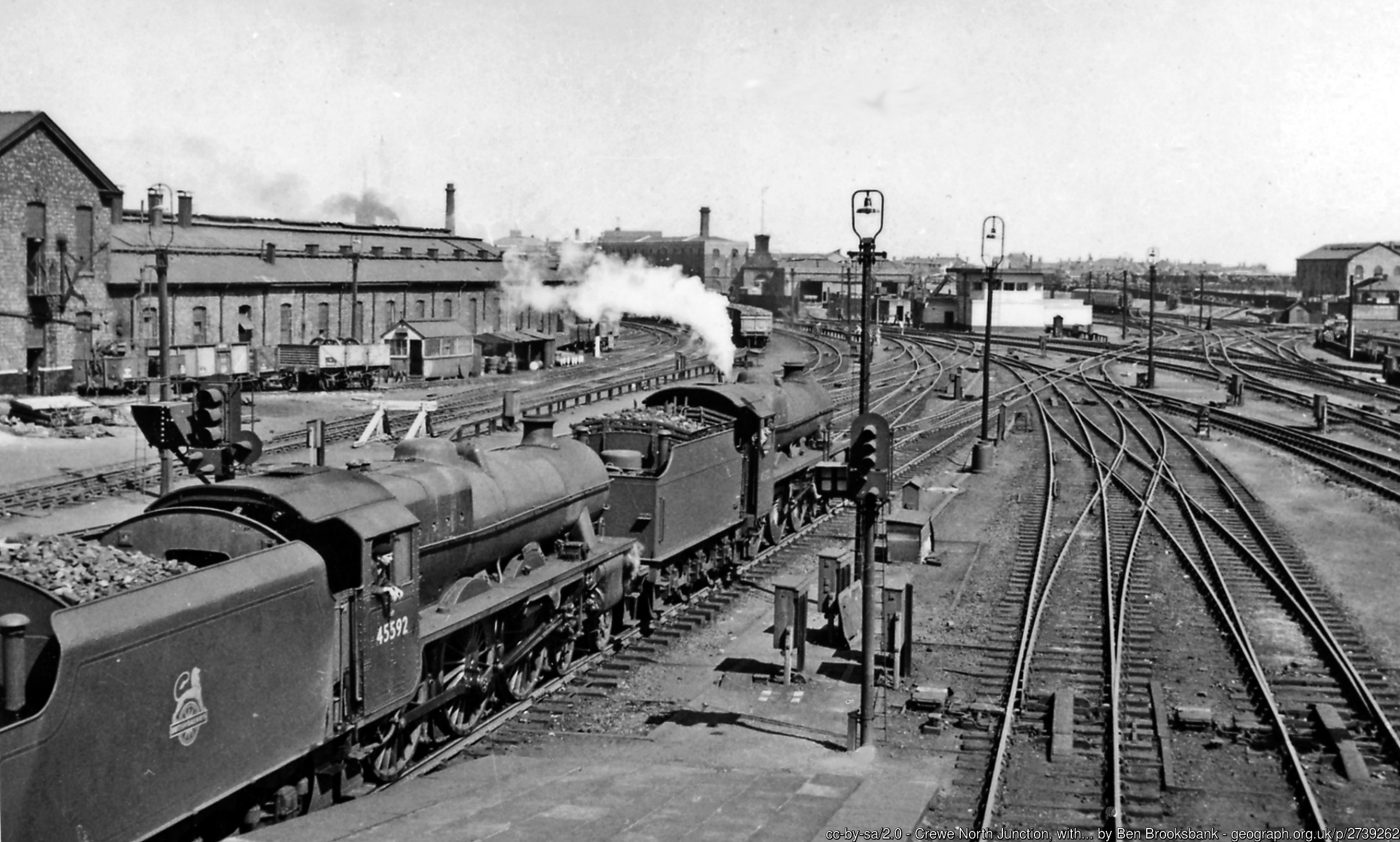
Crewe North Junction, with two Stanier ‘Jubilees’ on a Down Liverpool express
View northward from the footbridge: WCML major junction. On the left is the ‘Middle Shed’ of the large Crewe North Locomotive Depot. In the middle distance is the white-painted North Junction power signalbox with the Chester line curving left in front of it and the main line to the North and Liverpool to its right; over to the right is the main line to Manchester. (Frustratingly out of sight in tunnel underneath are the Liverpool and Manchester Independent (freight) lines to and from Basford Hall Yards). Directly underneath are the Bay Platform 7 and 8 lines and over to the right all the Up lines. The two 4-6-0s, No. 45722 ‘Defence’ (built 8/36, withdrawn 12/62) piloting No. 45592 ‘Indore’ (built 12/34, withdrawn 9/64), are pulling away from Platform 1 with the 07.55 Euston to Liverpool Lime Street. Beyond them are the Down Through No. 1 and Engine lines.
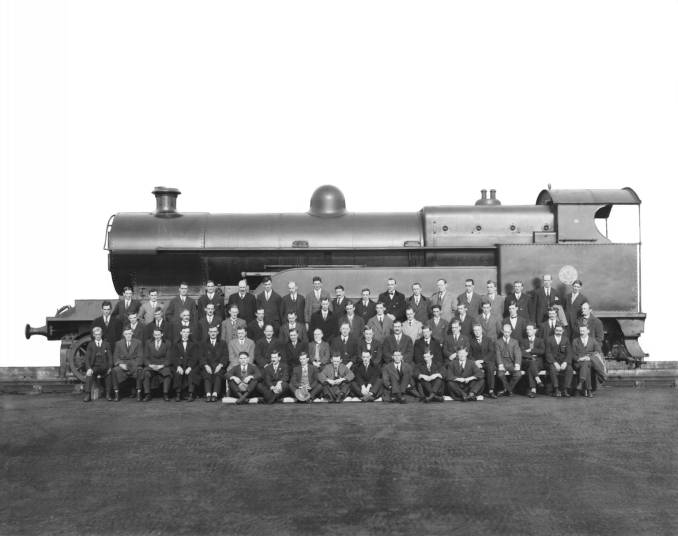
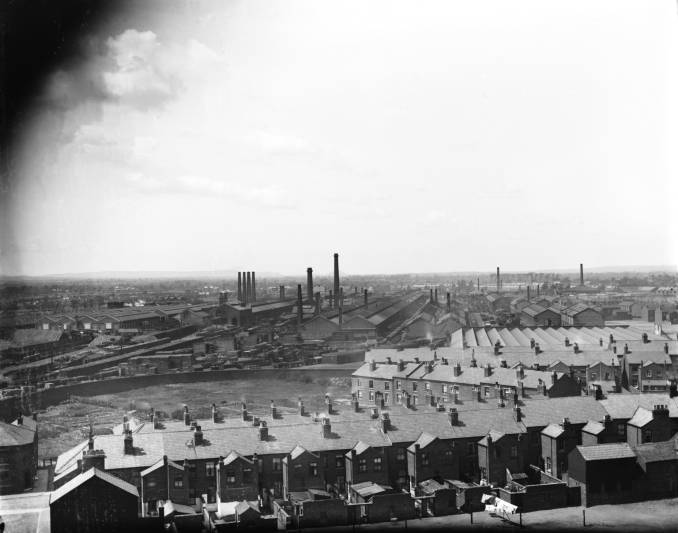
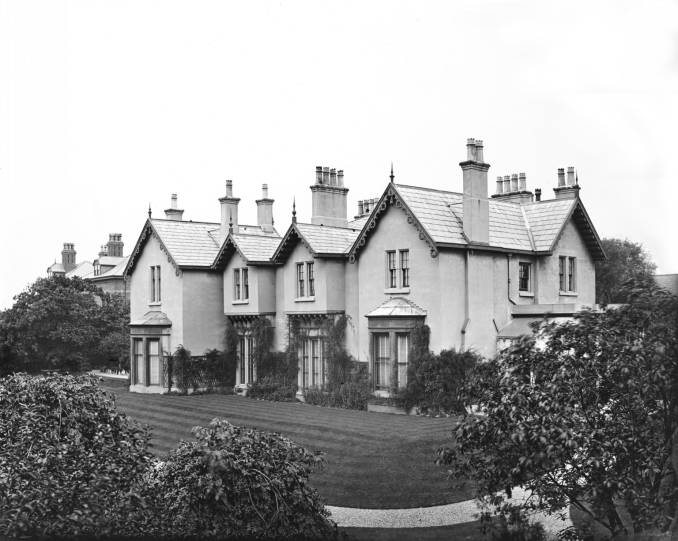
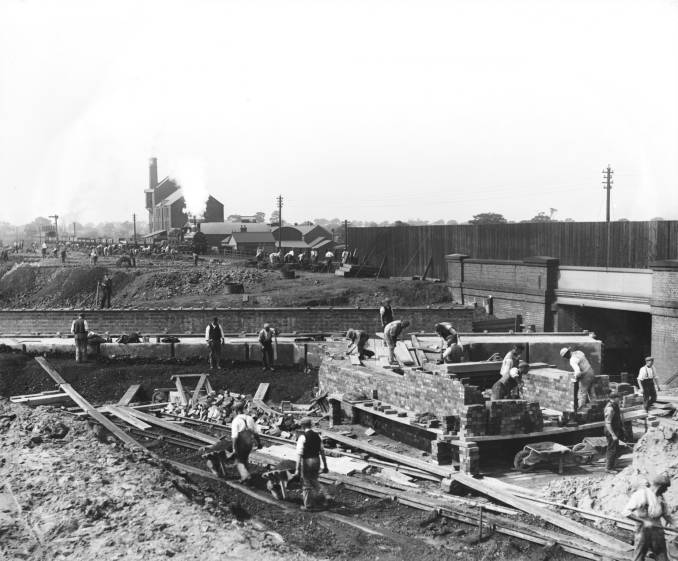
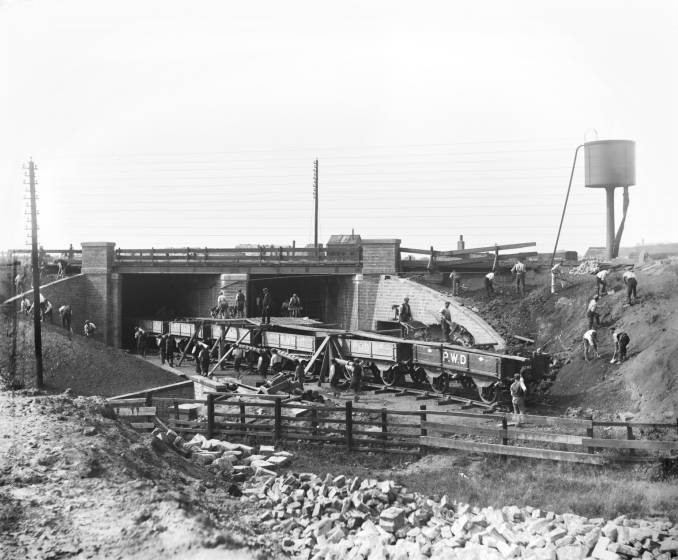
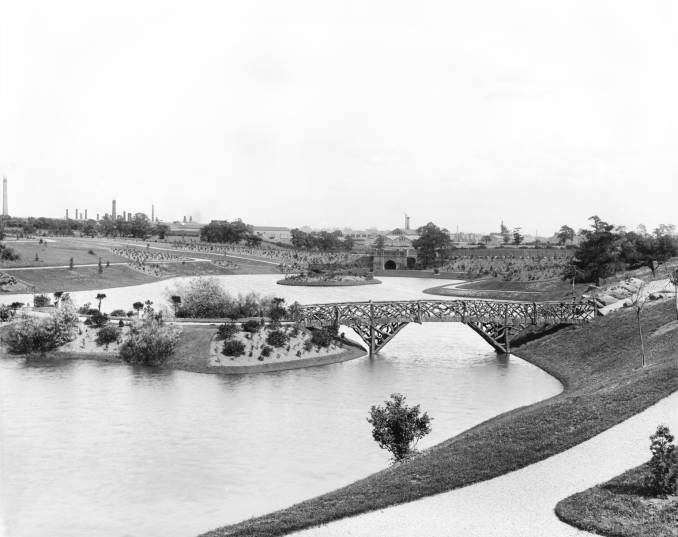
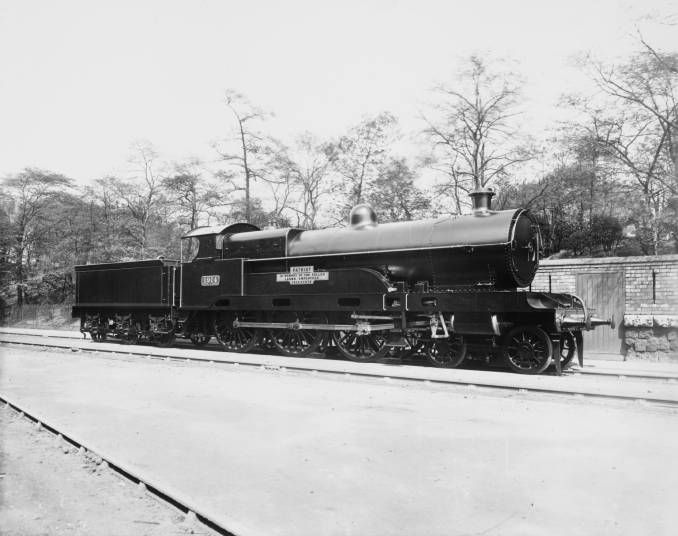
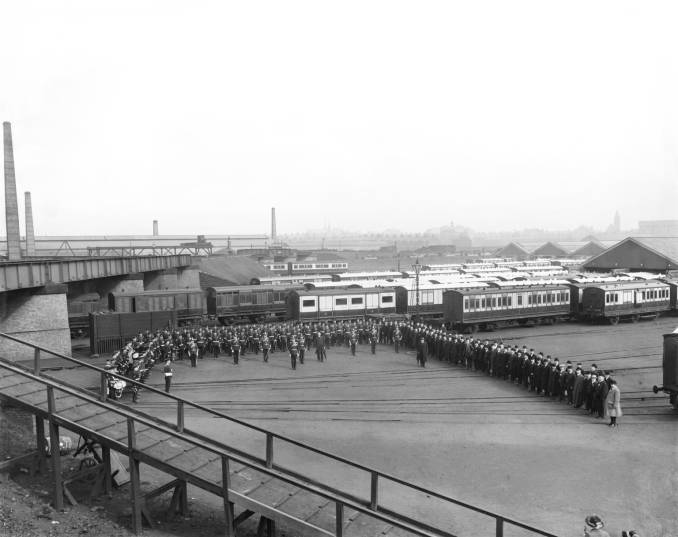
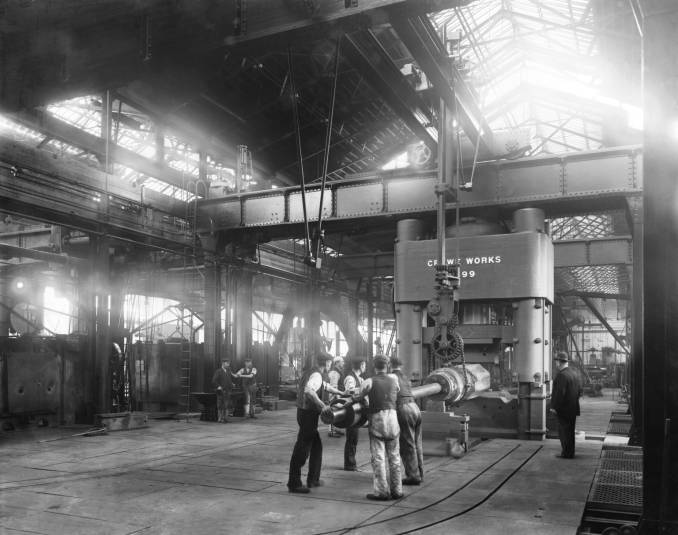
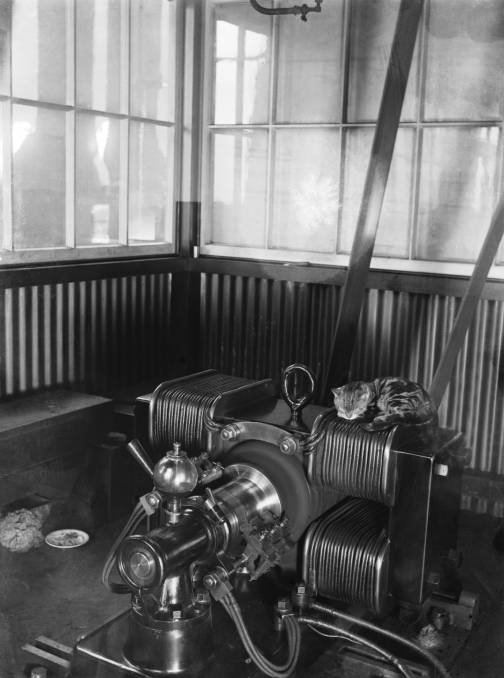
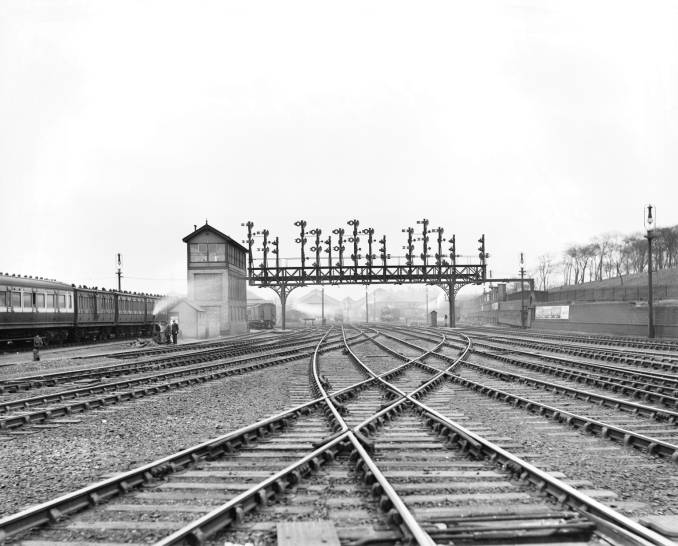
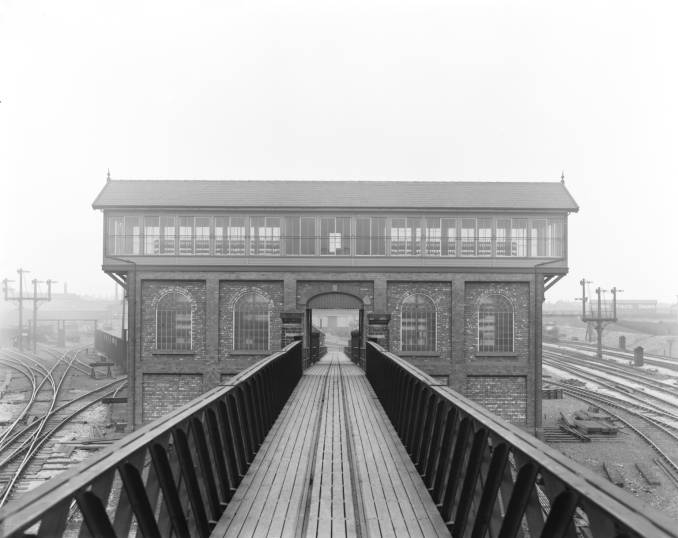
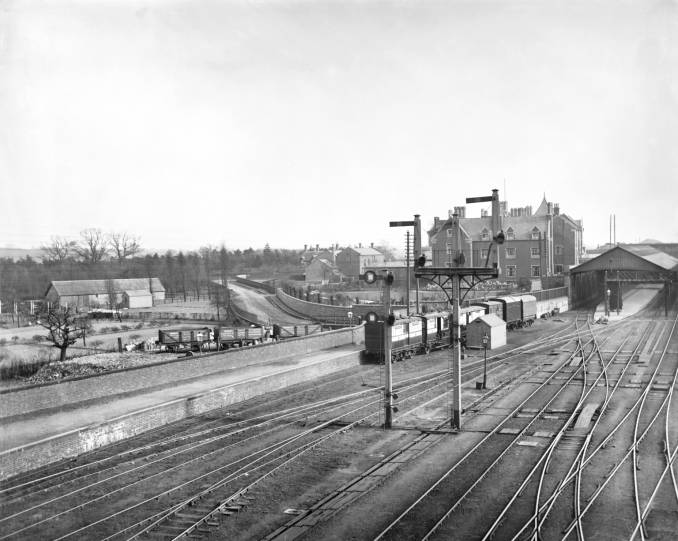
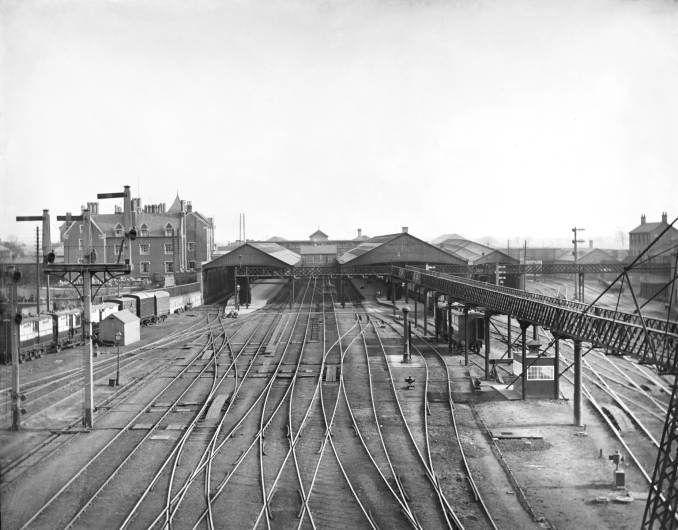
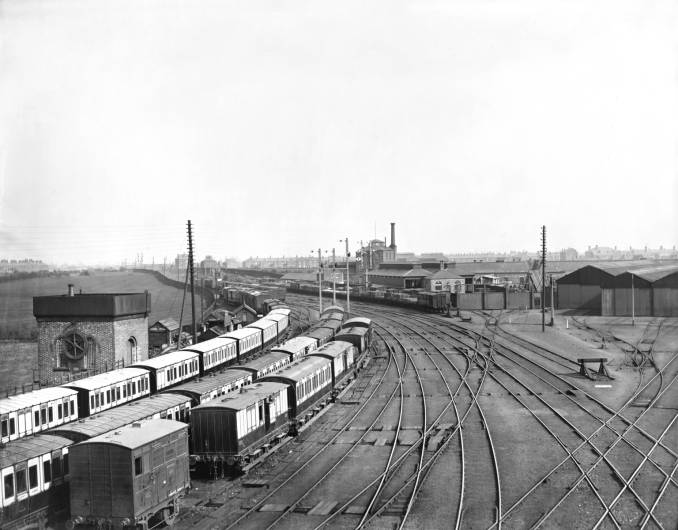
Crewe from North Junction signal cabin, April 1881. Before the coming of the railways Crewe was a tiny hamlet. However, in the 1830s the hamlet quickly expanded when the railway works were built, and the station was on the main line from London to the North West of England.
© National Railway Museum and SSPL